Ernest Cognacq began as a travelling salesman and a seller of fabrics from a stall on the Pont-Neuf; around 1870 he set up shop at the foot of the bridge, near the site of an old water pump decorated with the Samaritan woman at the well. The shop took her name. In 1872 he married Marie-Louise Jaÿ, a saleswoman from the Bon Marché, and together they made La Samaritaine one of the great department stores of Paris. The couple had no children. From about 1900 they spent part of their fortune on the art of the century before the Revolution: paintings, pastels, sculpture, furniture, porcelain and the jewelled snuffboxes that eighteenth-century courtiers exchanged as gifts.
Marie-Louise Jaÿ died in 1925 and Ernest Cognacq in February 1928. He left the collection to the City of Paris, with a building on the boulevard des Capucines, beside the Samaritaine de Luxe store, to house it. The museum opened there in June 1929.
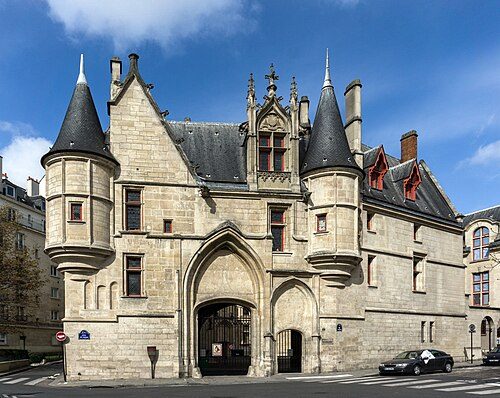
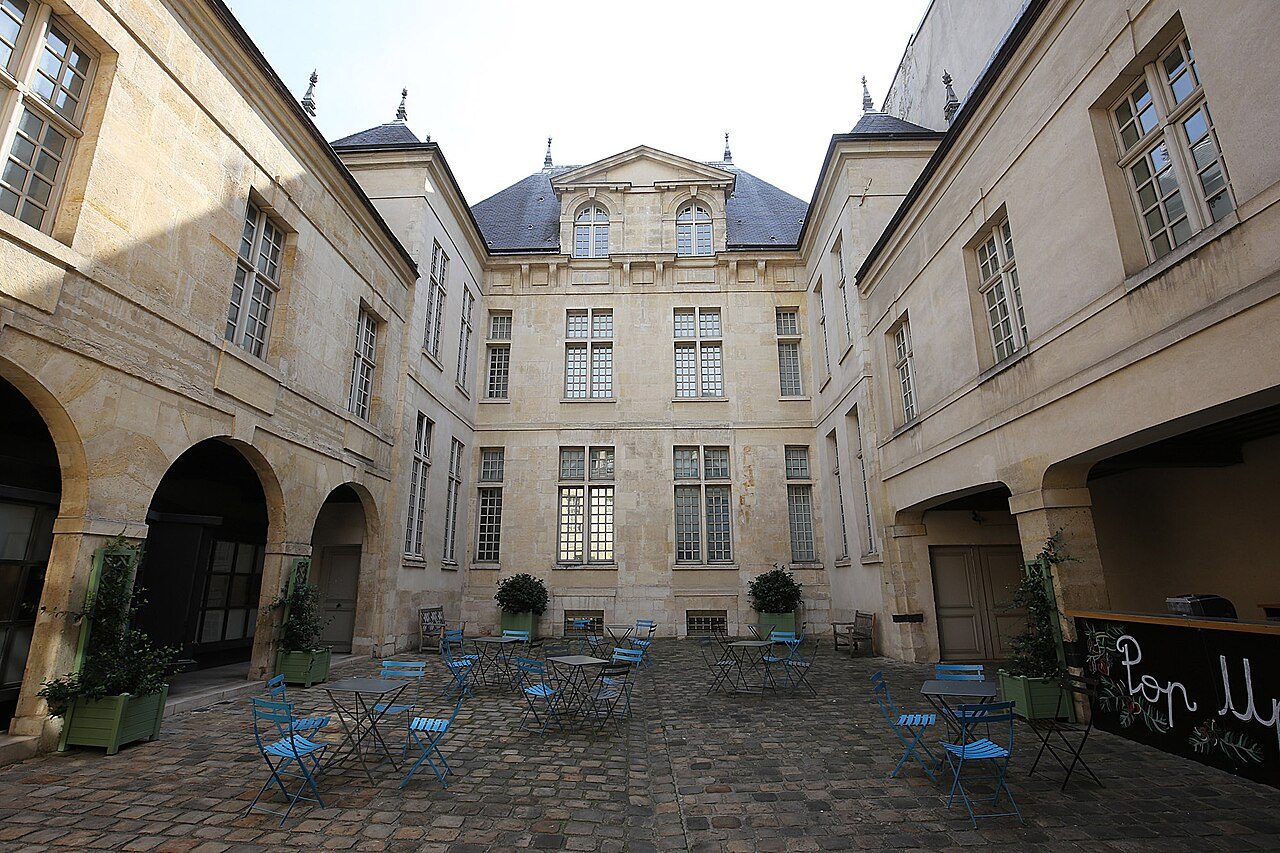
Sixty years later the collection moved east to the Marais, into the Hôtel Donon. The house had been built from 1575 for Médéric de Donon, a controller of the king’s buildings, and its steep, tall roof is a rare survival of the late sixteenth century in Paris. It passed through several families and, in the nineteenth century, was cluttered with workshops and sheds; Eugène Atget photographed it in that state. The City bought it in 1974 and restored it, and the museum reopened there in December 1990.
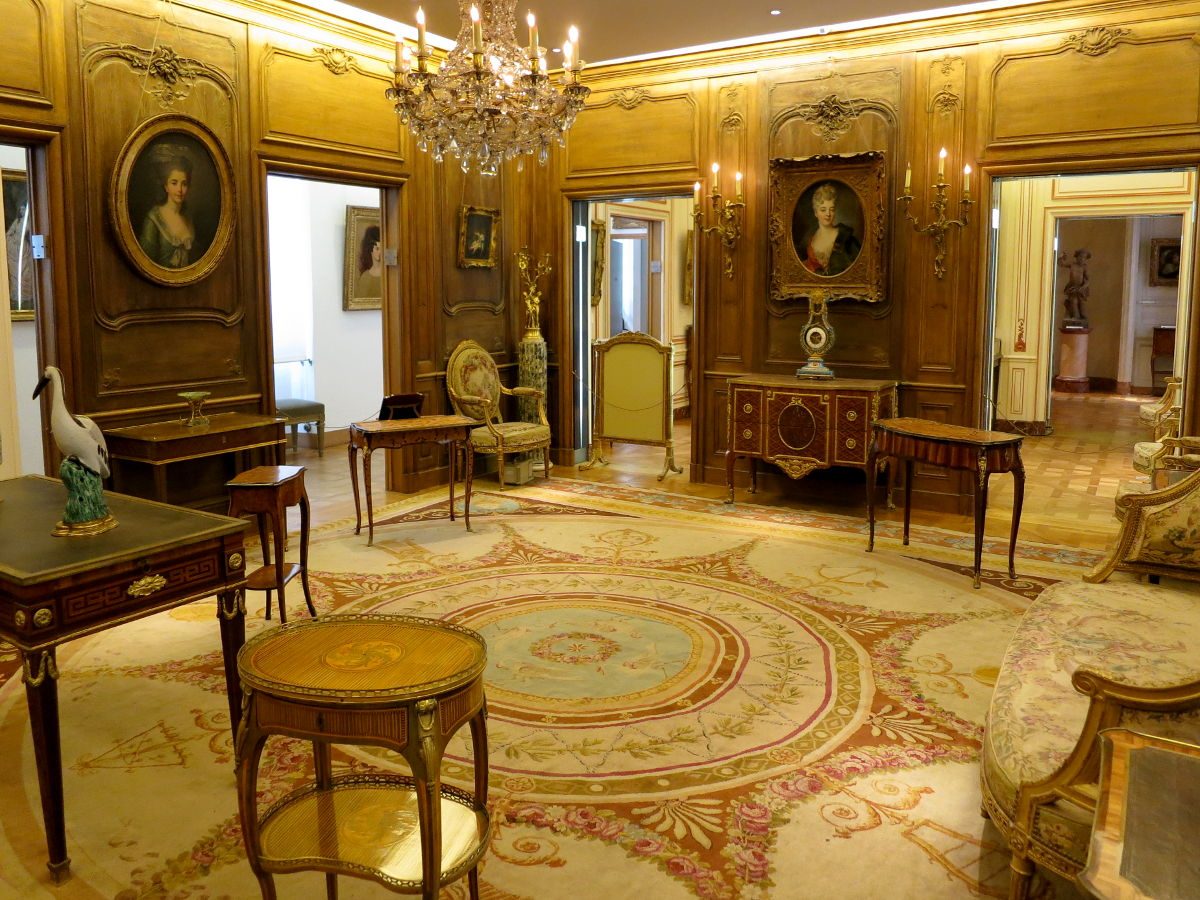
The museum is small, and that suits the collection, which is about intimacy: Rembrandt’s early Balaam’s Ass of 1626, Tiepolo’s Banquet of Cleopatra, Boucher, Chardin, Fragonard, Greuze, Watteau, a Canaletto view of Venice, Meissen figures, and cabinets of boxes so small they demand you lean in. Paintings hang among furniture and panelling rather than in a white gallery, so the visit feels closer to a house than to a museum.
What to look for
- The tall sixteenth-century roof of the Hôtel Donon, seen from the courtyard.
- Rembrandt’s Balaam’s Ass, an early work dated 1626.
- The snuffboxes and small gold and enamel objects in the display cases.
- Tiepolo’s Banquet of Cleopatra (1742–1743).
Timeline
- 1575Médéric de Donon builds his house on the rue Elzévir
- c. 1870Ernest Cognacq opens the shop that becomes La Samaritaine (uncertain date)
- 1928Death of Ernest Cognacq; bequest to the City of Paris
- 1929The museum opens on the boulevard des Capucines
- 1974The City of Paris buys the Hôtel Donon
- 1990The museum reopens in the Hôtel Donon
Works to see here
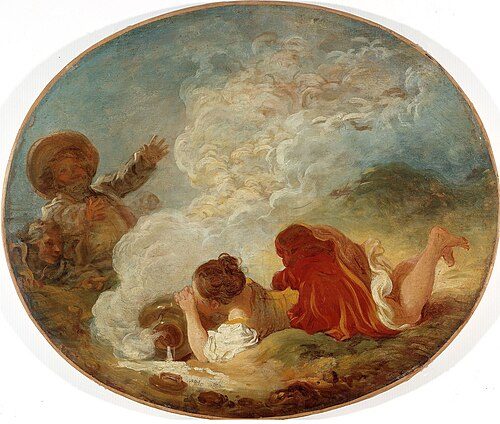
Photo: Jean-Honoré Fragonard, Public domain, Wikimedia Commons
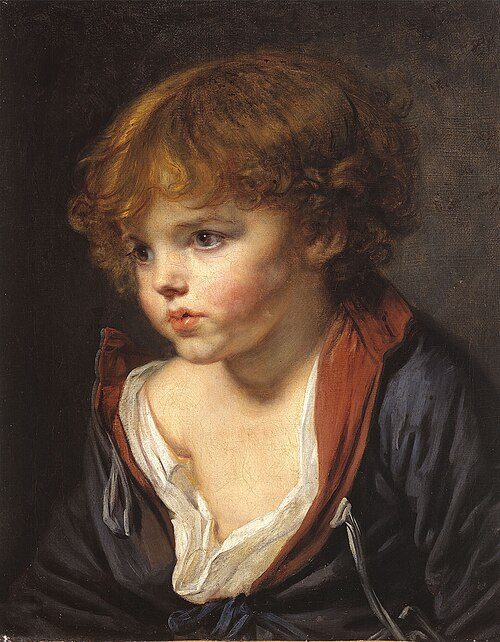
Photo: Jean-Baptiste Greuze, Public domain, Wikimedia Commons
Plaques within 250 m
- 5 Rue Payenne · 60 m
L'ILLUSTRE ARCHITECTE/FRANÇOIS MANSART/NÉ A PARIS EN 1598/ HABITA CETTE MAISON/QU'IL AVAIT BATIE EN 1652/ET Y MOURUT/LE 23 SEPTEMBRE 1666
- 11 Bis Rue Elzevir · 70 m
DANS CET IMMEUBLE/EST NÉE/SILVIA MONFORT/1923-1991/RÉSISTANTE, COMÉDIENNE/ ROMANCIÈRE/METTEUR EN SCÈNE/ DIRECTRICE DE THÉÂTRE
- 5 Rue Payenne · 70 m
L'ILLUSTRE ARCHITECTE / FRANÇOIS MANSART / NÉ À PARIS EN 1598 / HABITA CETTE MAISON / QU'IL AVAIT BATIE EN 1642 / ET Y MOURUT / LE 23 SEPTEMBRE 1666
- 24 Rue Pavée · 140 m
Hôtel construit pour Diane de France duchesse d'Angoulême 1536-1619 agrandi et remanié à plusieurs reprises à partir du XVIIème siècle. En cet hôtel Guillaume de Lamoignon premier président du parlement de Paris 1617-1677 et naquit son arrière petit-fils Malhesherbes 1721-1794. La première bibliothèque publique de la Ville de Paris fondée par Antoine Moriau procureur du roi et de la Ville y fut ouverte en 1763. Alphonse Daudet y vécut de 1867 à 1876.
- 23 Rue De Sévigné · 140 m
HOTEL COMMENCE EN 1544 / PAR PIERRE LESCOT ET JEAN GOUJON / POUR JACQUES DE LIGNERIS PRESIDENT AU PARLEMENT / ACQUIS EN 1572 PAR MADAME DE CARNAVALET / TRANSFORME DE 1655 A 1661 PAR FRANCOIS MANSART / HABITE DE 1677 A 1696 PAR MADAME DE SEVIGNE
- 29 Rue Sévigné · 150 m
HOTEL CONSTRUIT EN 1686 / PAR PIERRE BULLET / POUR MICHEL LE PELETIER DE SOUZY / INTENDANT DES FINANCES / HABITE PAR LE CONVENTIONNEL LE PELETIER DE SAINT FARGEAU / ET ACQUIS PAR LA VILLE EN 1898 / LA BIBLIOTHEQUE HISTORIQUE DE LA VILLE DE PARIS / FORMEE PAR JULES COUSIN EN 1871 À L'HOTEL CARNAVALET A ÉTÉ TRANSFÉRÉE DANS CET HÔTEL EN 1898
- 9 Rue De La Perle · 170 m
ÉLISA LEMONNIER/1805-1865/SAINT-SIMONIENNE/A FONDÉ ICI/LA PREMIÈRE ÉCOLE/D'ENSEIGNEMENT PROFESSIONNEL /POUR LES FEMMES
- 5 Rue De Thorigny · 180 m
EN 1829 /L'ÉCOLE CENTRALE /DES ARTS ET MANUFACTURES/FUT FONDÉE EN CET HÔTEL/PAR/LAVALLÉE-J.B.DUMAS/OLIVIER ET PÉCLET/ELLE Y DEMEURA JUSQU'EN 1884
Commemorative plaques, Ville de Paris open data (ODbL); transcriptions as published, in French. 16 in all within this radius.