
1500–1789
Royal Paris
The Paris of the kings begins in disorder. At the end of the sixteenth century the city had been through the Wars of Religion, sieges and plague. Henri IV, who entered it in 1594, set about turning it into a capital fit for a dynasty, and much of what he started can still be seen. The Pont Neuf, begun under Henri III in 1578 and finished under Henri IV, was the first Paris bridge without houses on it. The place Royale, now the place des Vosges, gave the city its first planned square, its houses all in brick and pale stone. In 1607 the same king founded the hôpital Saint-Louis outside the walls for plague victims, a quadrangle built in the same red and white.
The seventeenth century filled the gaps. The Île Saint-Louis was divided into building plots and lined with town houses such as the one Charles Gruyn commissioned around 1656, now the hôtel de Lauzun. Cardinal Mazarin opened his library to scholars in 1643 and left it to the college he founded facing the Louvre. Colbert gave Louis XIV an Academy of Sciences and, from 1667, an observatory laid out on the meridian. Private builders were busy too: in the Marais the hôtel de Beauvais rose on the rue François-Miron, and in the Faubourg Saint-Antoine, where craftsmen worked outside the guilds, a country house of the 1640s slowly turned into the workshops of the cour de l’Étoile-d’Or.
In 1682 Louis XIV moved the court to Versailles, and Paris was left to its magistrates, financiers and merchants. The city went on growing west and south. In the Faubourg Saint-Germain the provost of the merchants commissioned a monumental fountain from Bouchardon in 1739, and Voltaire mocked it for giving so little water. Collectors and tradesmen built and furnished houses whose rooms survive in museums: the Cognacq-Jay collection gathers the art of this century in a house of 1575 in the Marais.
The last royal works were fiscal. From 1784 the Farmers-General surrounded the city with a customs wall, and Claude-Nicolas Ledoux designed its toll houses as small temples; the Rotonde de la Villette is the grandest survivor. Parisians hated the wall, and in July 1789 its gates were among the first things the crowd attacked. In the little Madeleine cemetery, opened in 1722, lay 133 victims of a crush during the fireworks for the future Louis XVI’s wedding in 1770; twenty-three years later the king himself would be buried there. This thread stops there; the Revolution has its own.
-
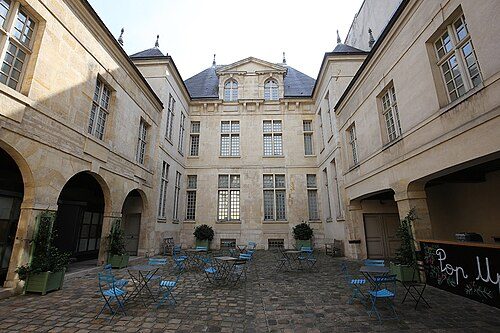 Small museums · 3rdMusée Cognacq-Jay
A town house built from 1575 for a controller of the king’s buildings, now home to a collection of eighteenth-century art.
-
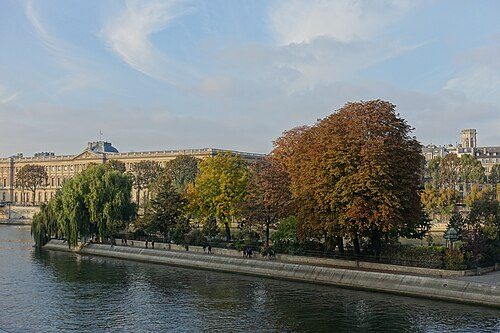 Gardens & green ways · 1stSquare du Vert-Galant
Below the Pont Neuf, begun in 1578 and finished under Henri IV, whose statue looks down on the garden named after his nickname.
-
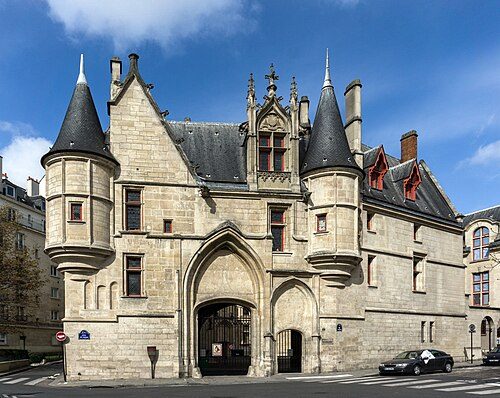 Oldest Paris · 4thHôtel de Sens
The archbishops’ house where Marguerite de Valois, Henri IV’s first wife, lived in 1605–1606.
-
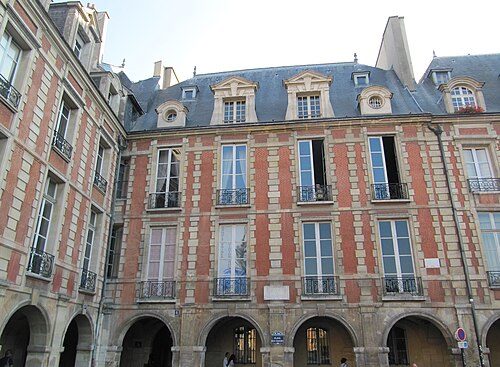 Writers’ houses · 4thMaison de Victor Hugo
A house on the place Royale, Henri IV’s square, whose plot was granted in 1605.
-
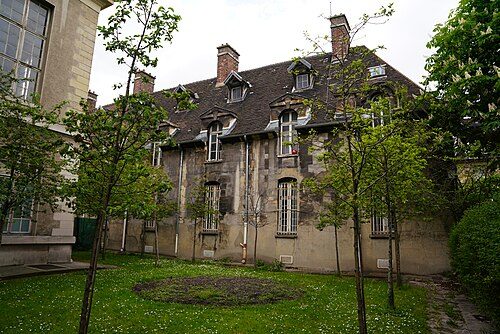 Curiosities · 10thHôpital Saint-Louis (historic quadrangle)
Henri IV’s plague hospital of 1607, a brick-and-stone quadrangle that is a close cousin of the place des Vosges.
-
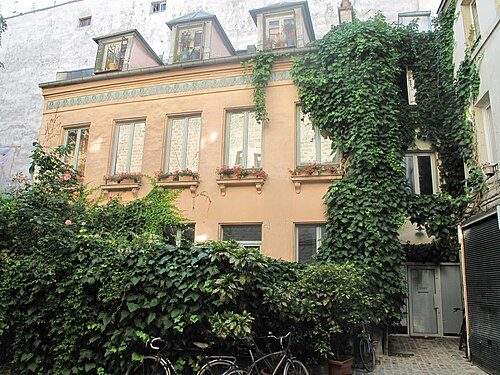 Curiosities · 11thCour de l’Étoile-d’Or
A country house of the 1640s in the Faubourg Saint-Antoine, gradually taken over by the furniture-makers who worked there outside the guilds.
-
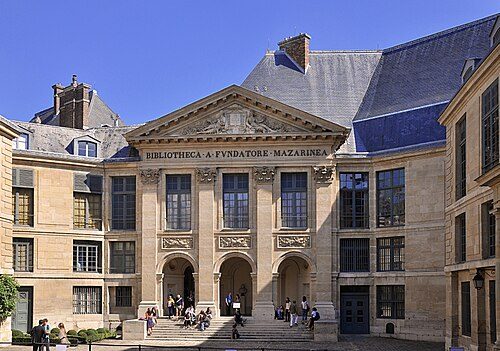 Writers’ houses · 6thBibliothèque Mazarine
Mazarin’s library, opened to scholars in 1643 and reinstalled in his college facing the Louvre.
-
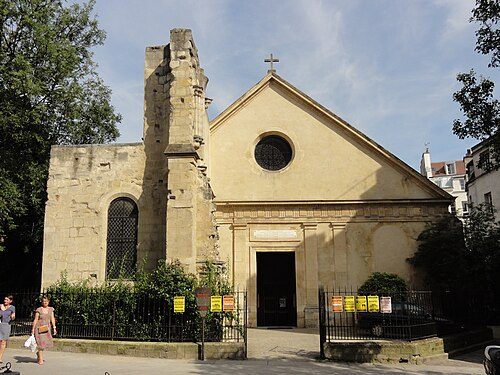 Oldest Paris · 5thSaint-Julien-le-Pauvre and square René-Viviani
A medieval church given its plain classical front in 1651, when it was shortened and joined to the Hôtel-Dieu.
-
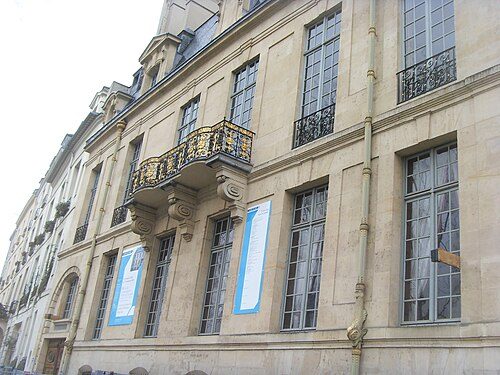 Writers’ houses · 4thHôtel de Lauzun
A financier’s house of about 1656 on the newly built Île Saint-Louis, with some of the richest painted interiors of the period.
-
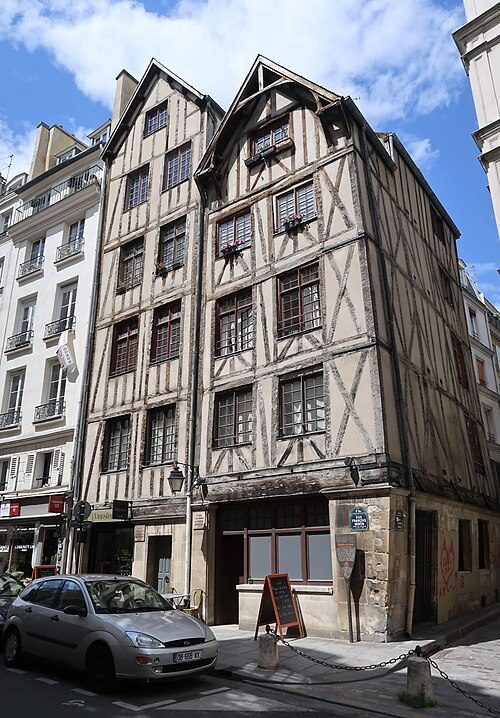 Oldest Paris · 4thRue François-Miron
Where the hôtel de Beauvais rose in the later 1650s for Catherine Bellier, chief lady’s maid to Anne of Austria, and where the young Mozart stayed in 1763–1764.
-
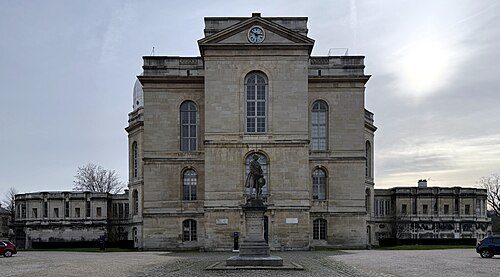 Curiosities · 14thParis Observatory (Perrault building)
Louis XIV’s observatory, founded in 1667 on the meridian, where Rømer showed in 1676 that light has a finite speed.
-
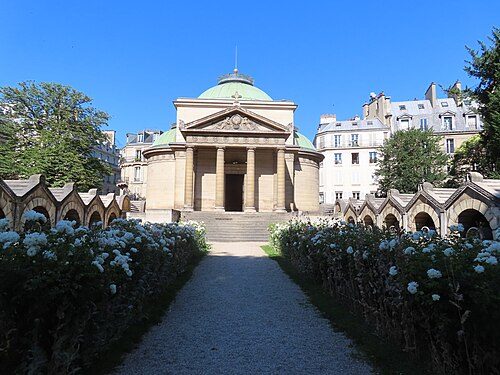 Curiosities · 8thChapelle expiatoire
The site of the Madeleine cemetery, opened in 1722, where victims of the crush at the royal wedding celebrations of 1770 were buried.
-
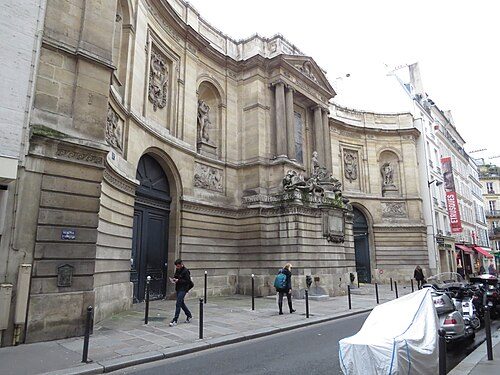 Curiosities · 7thFontaine des Quatre-Saisons
Bouchardon’s fountain of 1739–1745, a monument to Louis XV that Voltaire found long on architecture and short on water.
-
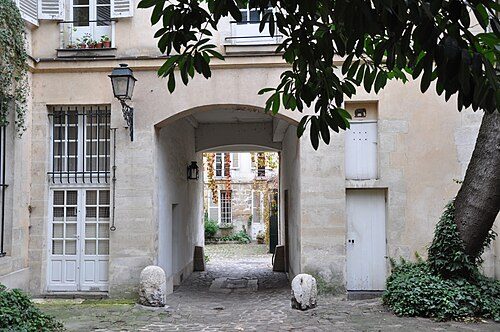 Oldest Paris · 6thCour de Rohan and Cour du Commerce-Saint-André
A passage opened in 1776 along the old city wall, on the eve of the Revolution.
-
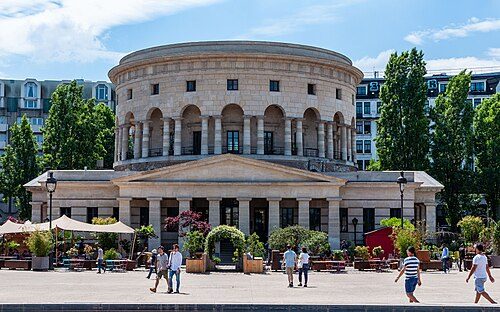 Curiosities · 19thRotonde de la Villette (Barrière Saint-Martin)
Ledoux’s grandest toll house on the Wall of the Farmers-General, built in 1784–1788: the last great work of royal Paris, and one of the most hated.