
All 36 places
Each place has its own page: its story, what to look for, the plaques around it, the nearest Métro and the neighbouring places on foot, with distances computed on the street network.
Covered passages (4)
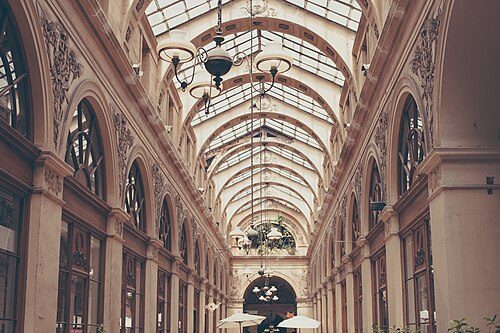 Covered passages · 2nd
Galerie Vivienne
A notary’s speculation of the 1820s, Pompeian in its colours, where Vidocq once climbed the stairs at no. 13.
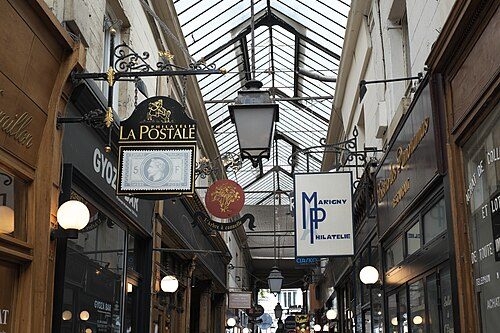 Covered passages · 2nd
Passage des Panoramas
Named for vanished rotundas of painted cities: the oldest Paris passage, and the first public place in town lit by gas.
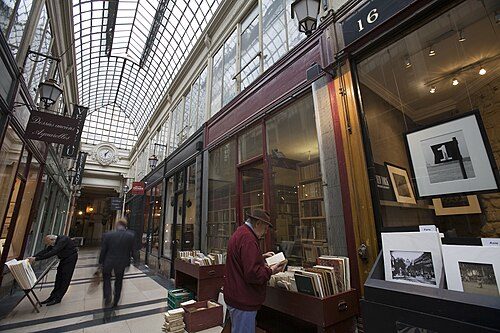 Covered passages · 9th
Passage Jouffroy
Iron, glass and a heated floor: the 1840s passage that carries the Panoramas north, with a dogleg, a few steps and the waxworks’ back door.
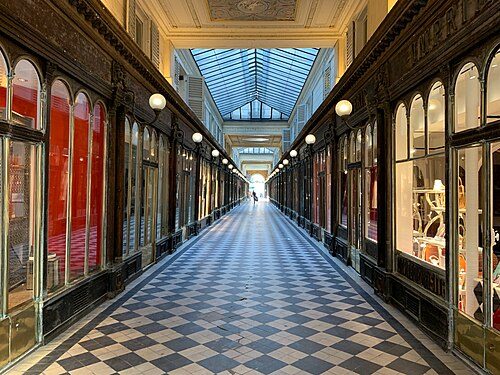 Covered passages · 1st
Galerie Véro-Dodat
Two pork butchers’ 1826 shortcut between the Palais-Royal and Les Halles, where crowds once pressed against a window full of caricatures.
Small museums (7)
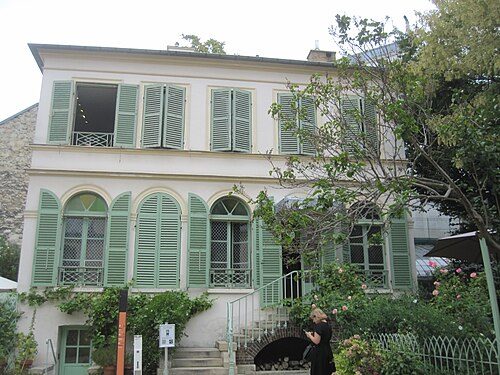 Small museums · 9th
Musée de la Vie romantique
Ary Scheffer’s house and studios at the end of a cobbled lane, where Chopin, Sand and Delacroix came on Friday evenings.
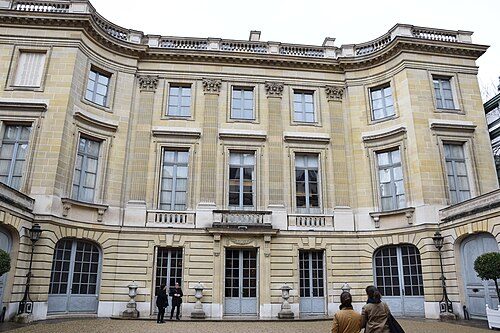 Small museums · 8th
Musée Nissim de Camondo
A banker’s eighteenth-century dream, built on the eve of 1914 and bequeathed as a museum in memory of a son killed in the air.
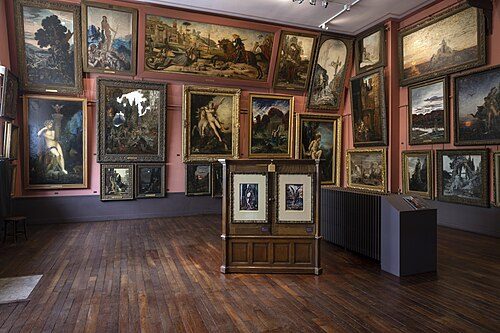 Small museums · 9th
Musée Gustave Moreau
A painter who turned his own house into his museum, with walls of gold-flecked visions and a spiral staircase climbing between them.
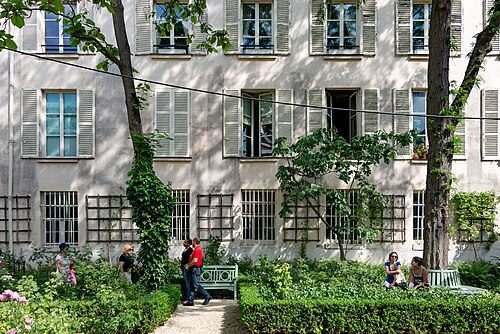 Small museums · 6th
Musée national Eugène-Delacroix
The last apartment and garden studio of Delacroix, taken so he could walk to his murals at Saint-Sulpice, and saved by painters who revered him.
 Small museums · 15th
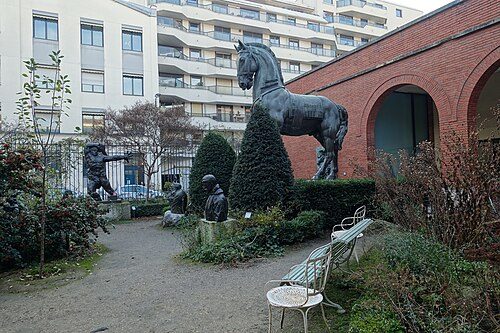
Musée Bourdelle
The Montparnasse studios where Antoine Bourdelle worked for over forty years, plaster giants and all, a few steps from the station.
 Small museums · 3rd
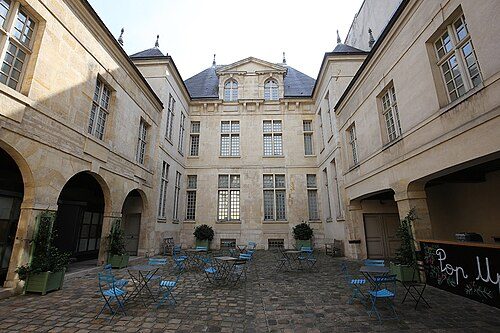
Musée Cognacq-Jay
The eighteenth-century treasures of the couple who founded La Samaritaine, now in a Renaissance house in the Marais.
 Small museums · 18th
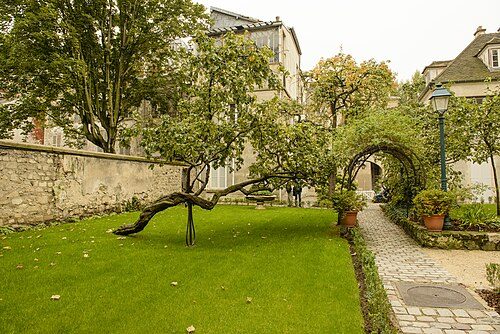
Musée de Montmartre
A seventeenth-century house on the Butte where Renoir painted his dance hall and Valadon, Utrillo and Utter shared a studio.
Writers’ houses (4)
 Writers’ houses · 16th
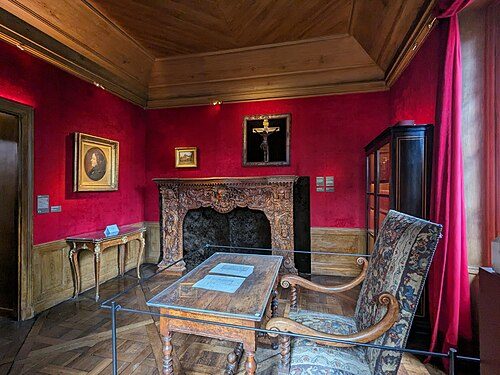
Maison de Balzac
The garden flat in Passy where Balzac hid from his creditors under a borrowed name, with a back way out down to the rue Berton.
 Writers’ houses · 4th
Maison de Victor Hugo
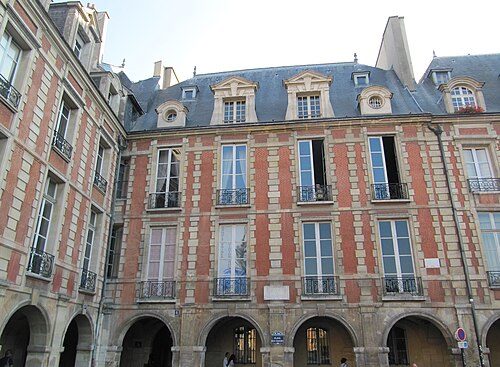
Sixteen years of Hugo’s life in a corner of the place des Vosges: the plays, the grief, the first drafts of Les Misérables.
 Writers’ houses · 4th
Hôtel de Lauzun
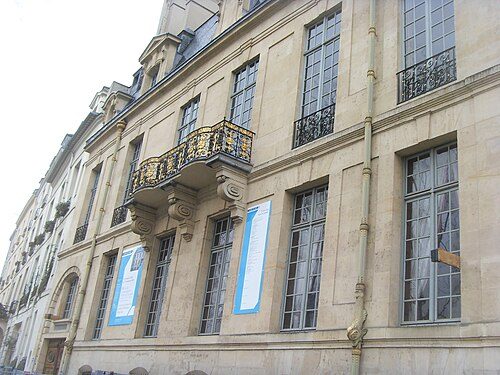
A gilded 1650s mansion on the Île Saint-Louis, where the young Baudelaire rented the attic and Gautier’s hashish eaters met.
 Writers’ houses · 6th
Bibliothèque Mazarine
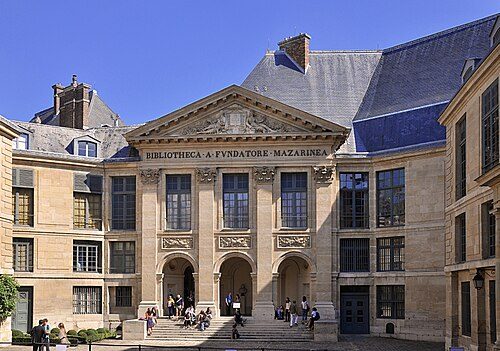
Cardinal Mazarin’s library, open to scholars since 1643 and still a working reading room under the dome of the Institut de France.
Oldest Paris (8)
 Oldest Paris · 5th
Arènes de Lutèce
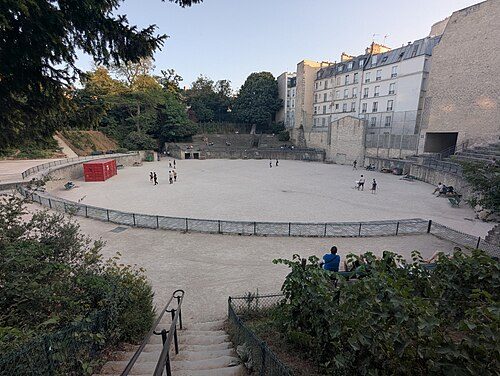
A Roman arena behind a row of Haussmann flats, where Lutetia once watched plays and fights and the 5e now plays pétanque.
 Oldest Paris · 3rd
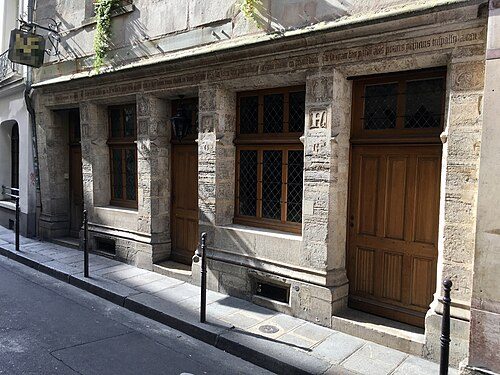
House of Nicolas Flamel
A charity house of 1407 built by a Paris scrivener whom later centuries turned into an alchemist. Its tenants owed him prayers.
 Oldest Paris · 2nd
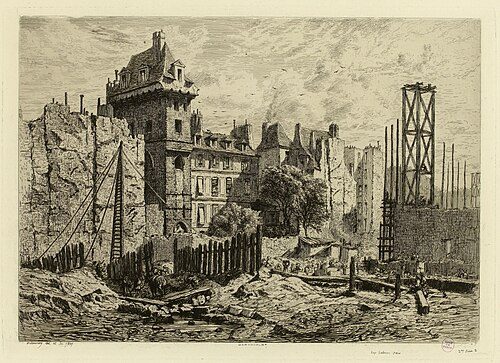
Tour Jean-sans-Peur
A duke’s tower built after a political murder, where a stone oak, hawthorn and hops spread across the top of the stair.
 Oldest Paris · 4th
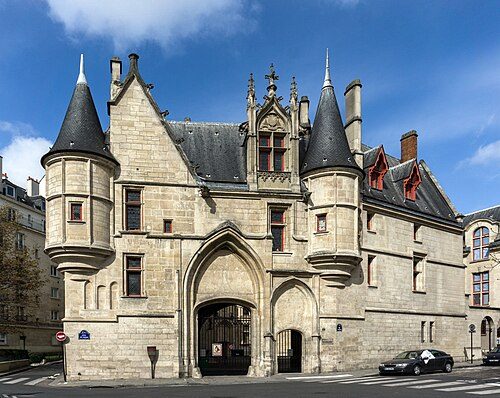
Hôtel de Sens
The archbishops’ Gothic town house by the Seine, now a library of posters and crafts, with a cannonball of 1830 still in its wall.
 Oldest Paris · 4th
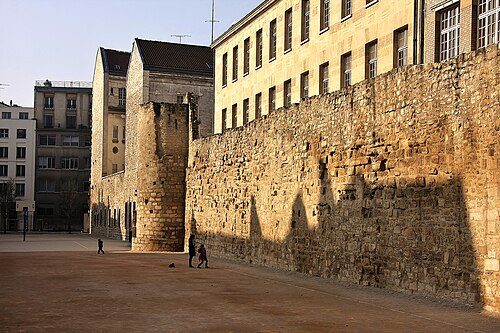
Wall of Philippe Auguste (rue des Jardins-Saint-Paul)
Sixty metres of the wall a king built around Paris before leaving on crusade, now the backdrop to a basketball court.
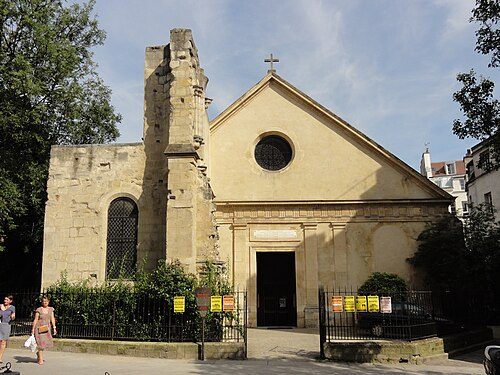 Oldest Paris · 5th
Saint-Julien-le-Pauvre and square René-Viviani
A twelfth-century church where the University once met, now Melkite, beside a garden with a robinia said to date from 1601.
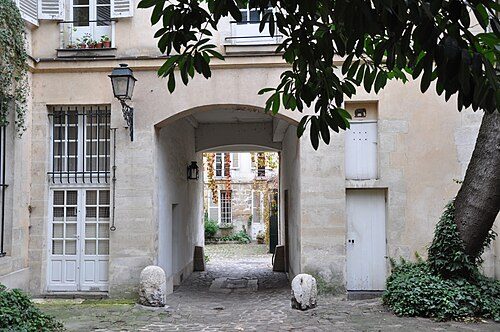 Oldest Paris · 6th
Cour de Rohan and Cour du Commerce-Saint-André
A cobbled passage of revolutionaries and medieval wall, and beyond it three quiet courtyards with the last mounting block in Paris.
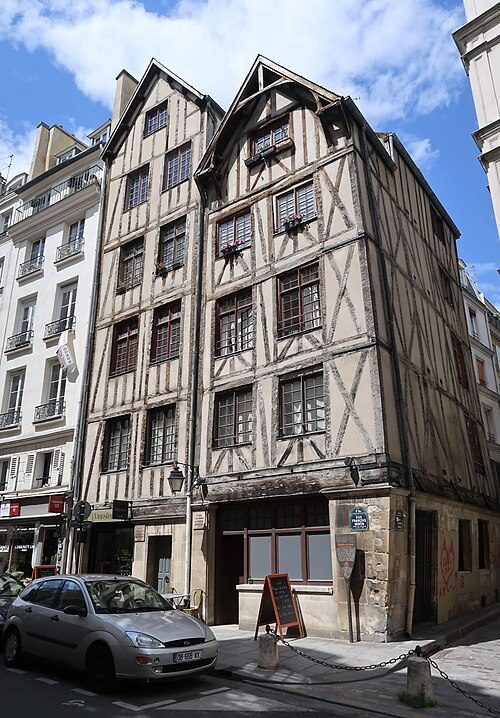 Oldest Paris · 4th
Rue François-Miron
Two timber-framed houses that look medieval and may partly be, on a street that follows a Roman road out of the city.
Gardens & green ways (6)
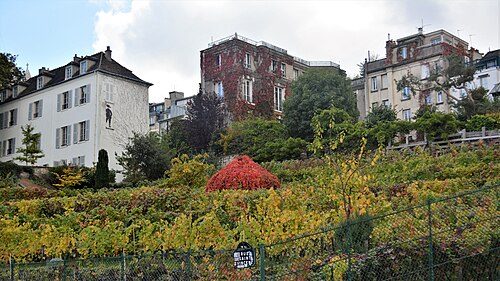 Gardens & green ways · 18th
Clos Montmartre vineyard
A north-facing vineyard planted in 1933 to stop a building plot, and celebrated with a harvest festival since 1934.
 Gardens & green ways · 15th
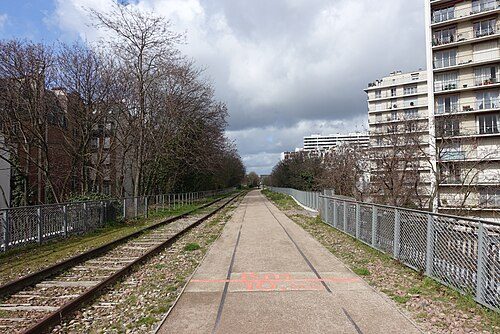
Petite Ceinture in the 15th
An abandoned railway that once ringed Paris, now a two-kilometre wild walk along the old tracks, through a tunnel opened in 2026.
 Gardens & green ways · 1st
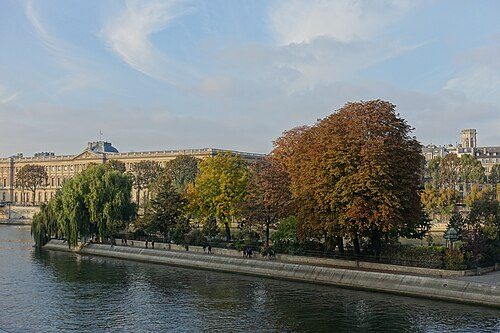
Square du Vert-Galant
The prow of the Île de la Cité, a garden at water level below Henri IV’s statue, near the spot where the last Templar master burned.
 Gardens & green ways · 12th
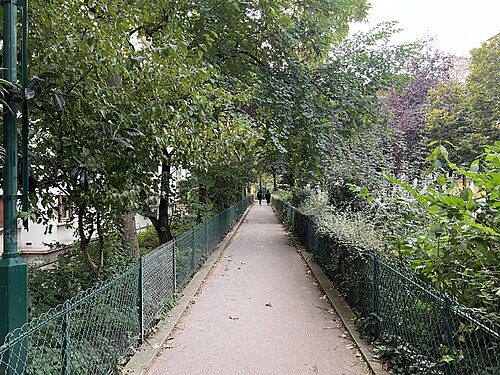
Coulée verte René-Dumont (Promenade plantée)
A railway viaduct turned into a garden walk above the 12e, the first of its kind, with craftsmen’s workshops in the arches below.
 Gardens & green ways · 12th
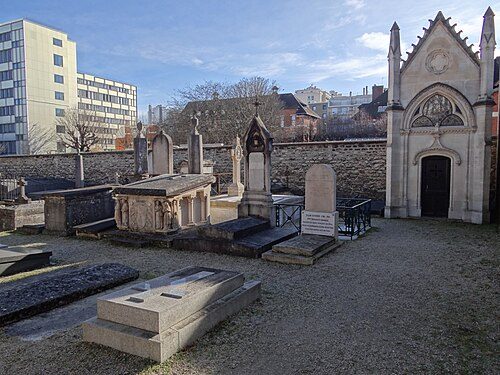
Picpus Cemetery
A convent garden that became the burial pit for 1,306 victims of the Terror, and where Lafayette lies under an American flag.
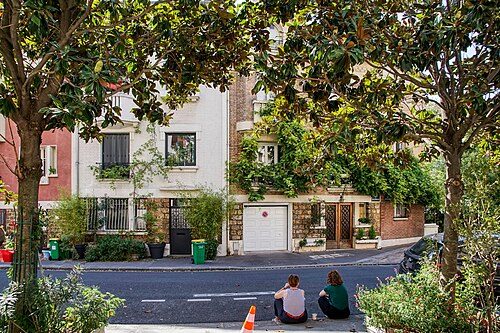 Gardens & green ways · 13th
Cité florale
A triangle of small houses and gardens on streets named for wisteria, iris and bindweed, built on a meadow the Bièvre used to flood.
Curiosities (7)
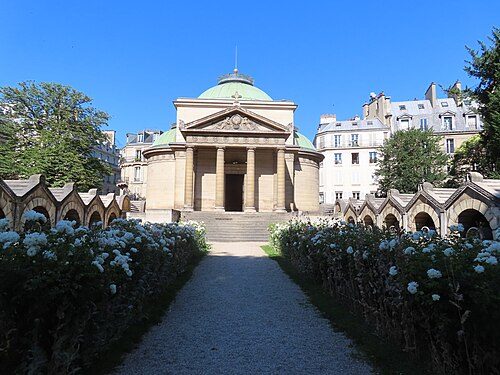 Curiosities · 8th
Chapelle expiatoire
Louis XVIII’s chapel on the cemetery where his guillotined brother and Marie-Antoinette were buried, and where hundreds more still lie.
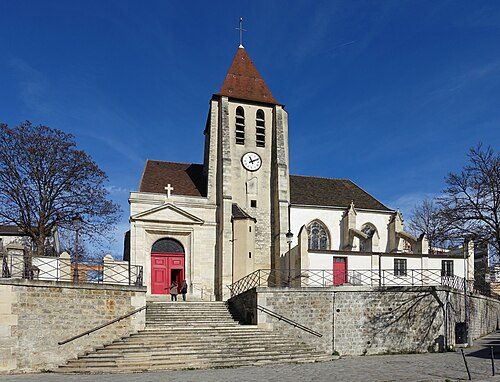 Curiosities · 20th
Saint-Germain-de-Charonne
A village church on a slope above rue de Bagnolet, still standing in its own churchyard, one of only two left in Paris.
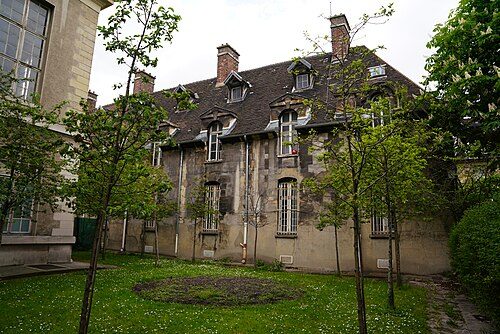 Curiosities · 10th
Hôpital Saint-Louis (historic quadrangle)
A plague hospital founded by Henri IV in 1607, its brick-and-stone quadrangle still enclosing a quiet garden inside a working hospital.
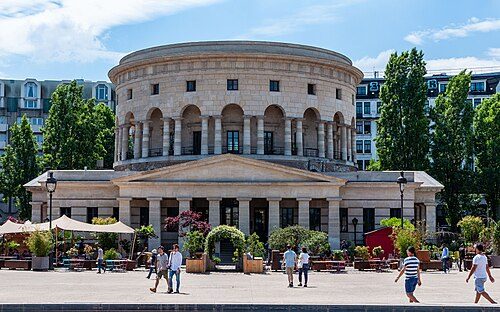 Curiosities · 19th
Rotonde de la Villette (Barrière Saint-Martin)
Ledoux’s tax temple of the 1780s, built into the hated customs wall around Paris, where the royal family changed coaches on the night of Varennes.
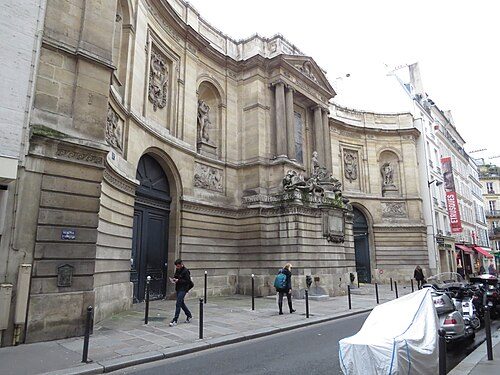 Curiosities · 7th
Fontaine des Quatre-Saisons
Bouchardon’s palace of a fountain on a narrow street, all marble allegory and very little water. Voltaire was not impressed.
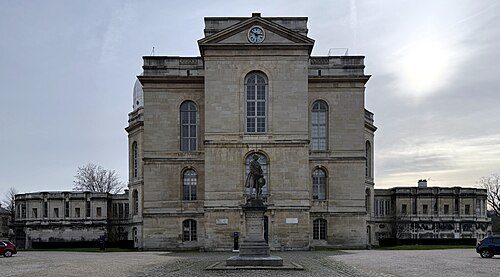 Curiosities · 14th
Paris Observatory (Perrault building)
Louis XIV’s observatory of 1667, built square on the meridian of Paris, where the speed of light was first shown to be finite.
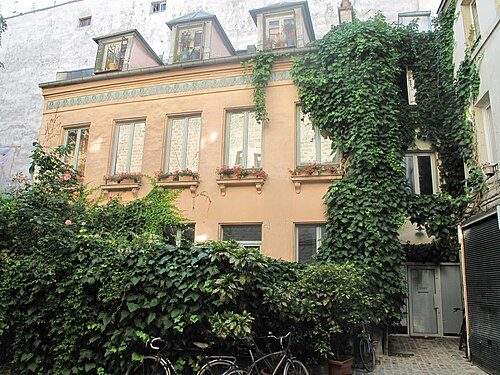 Curiosities · 11th
Cour de l’Étoile-d’Or
Two cobbled courtyards of the furniture-makers’ faubourg, with a 1640s staircase, a sundial and the workshops that replaced a garden.