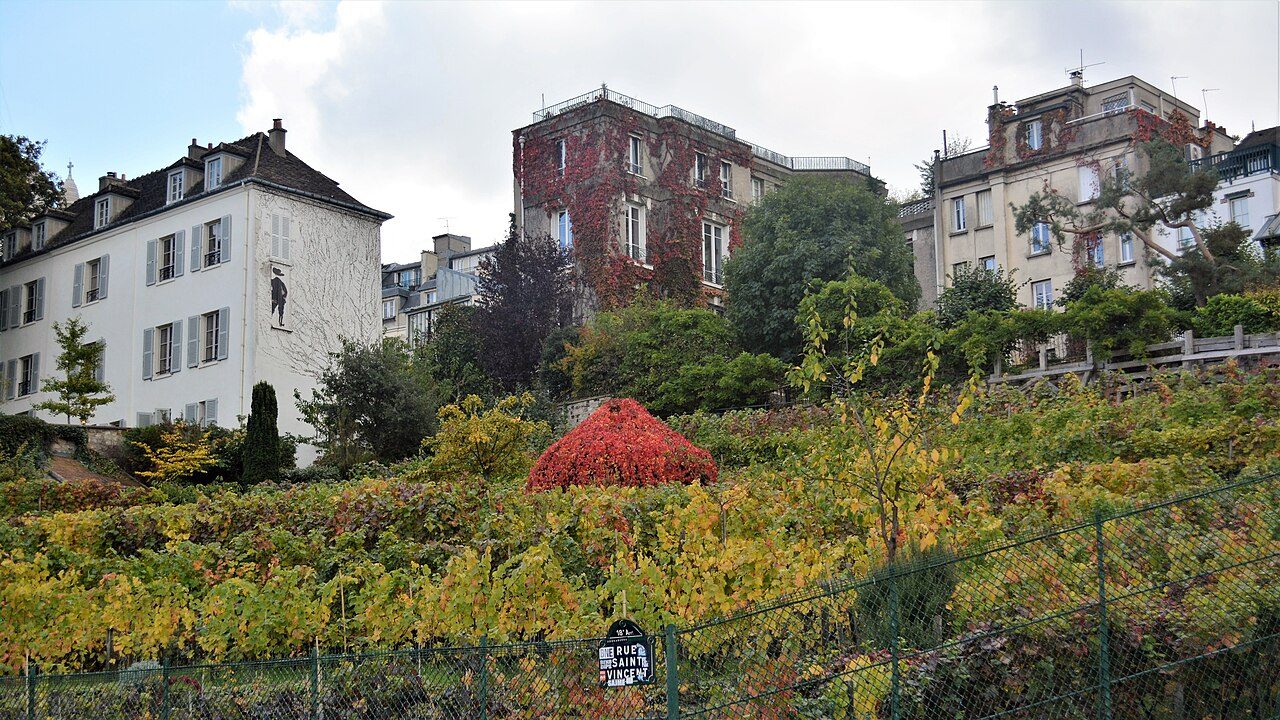
For most of its history Paris was wine country. Until the end of the Middle Ages the land within a day’s ride of the city was one of the great vineyards of Europe, and the slopes of Montmartre were covered in vines from at least the tenth century. The nineteenth century ended all that. Building land paid better than grapes; the railways brought cheaper wine from the south to the warehouses of Bercy; and a run of diseases from America, oidium in the 1840s, then phylloxera, then mildew, finished off what was left.
The plot at the corner of the rue des Saules and the rue Saint-Vincent had a more varied past. It had been a wooded garden, then an amusement ground, then waste land. In 1929 the illustrator Francisque Poulbot, whose street urchins had become the emblem of the Butte, and his friends dubbed it the ‘square de la Liberté', and when a developer eyed the site, a handful of residents, backed by the town hall, planted vines on it in 1933 to keep it open.
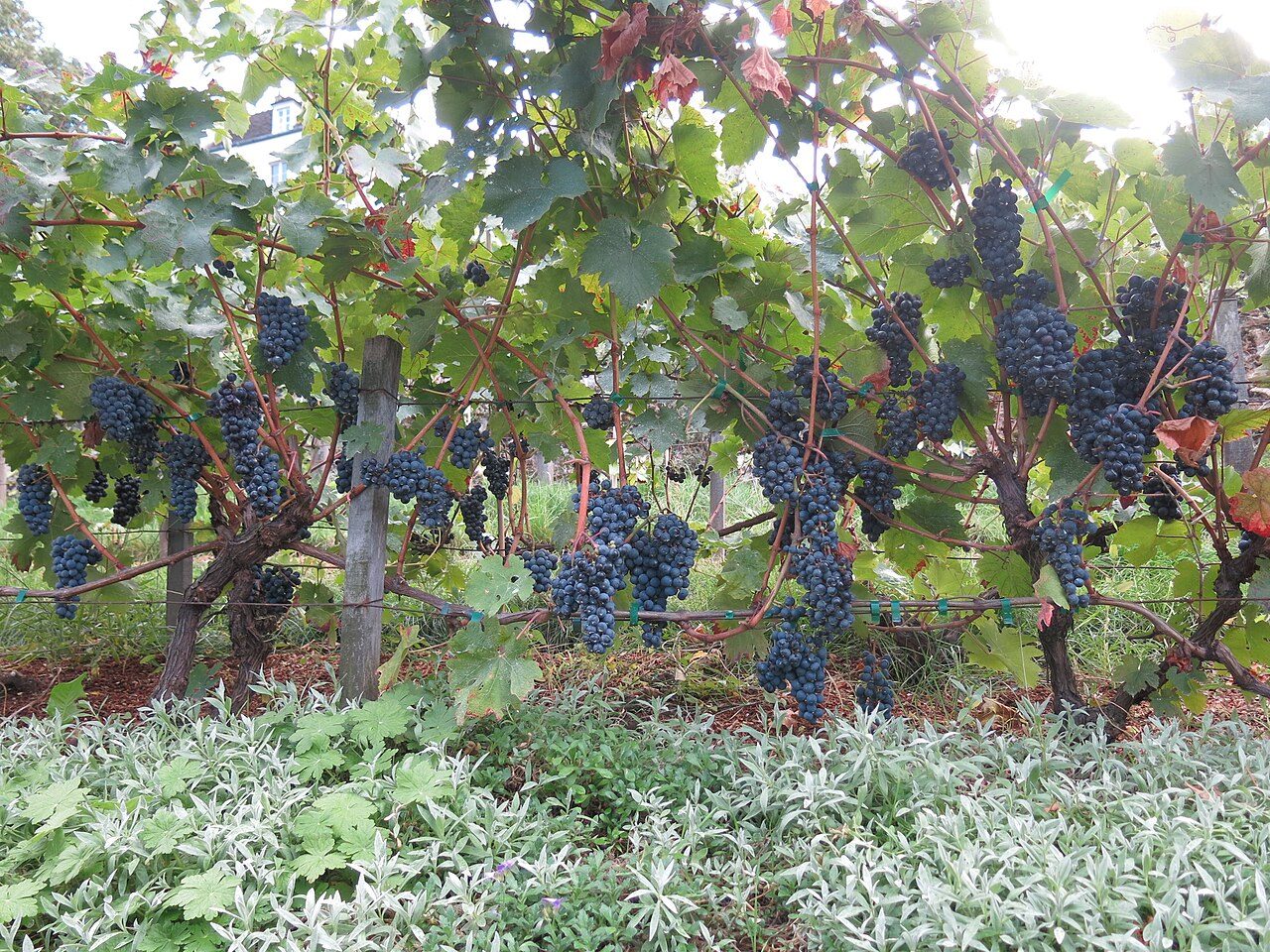
Vines do not fruit until their third year, so the first harvest festival, in 1934, had to make do with grapes given by growers from Beaujolais. The festival, now held each October with parades and brass bands, reached its 92nd edition in 2025. The vineyard is small, a north-facing slope of some 1,700 vines grown organically, and the wine is made in the cellars of the 18th arrondissement town hall, from some thirty grape varieties. The bottles are sold for the benefit of the neighbourhood’s social causes.
It is not a great wine, and no one pretends otherwise. But in a city where the price of land decides almost everything, a field of vines on a hillside a few minutes from Sacré-Cœur remains a small, stubborn act of civic affection. A statue of Saint Vincent, patron of winegrowers, keeps watch over a stone dedicated to Poulbot.
What to look for
- The rows of vines on the north slope, seen through the railings of the rue des Saules.
- The statue of Saint Vincent and the stone to Poulbot.
- The Lapin Agile cabaret at the foot of the vineyard, across the rue Saint-Vincent.
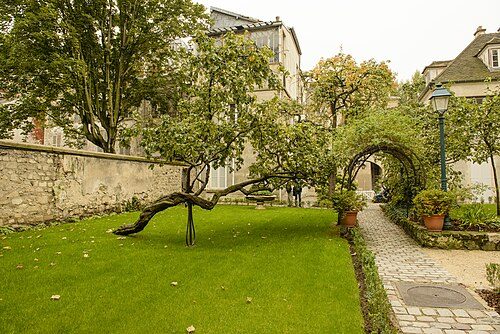
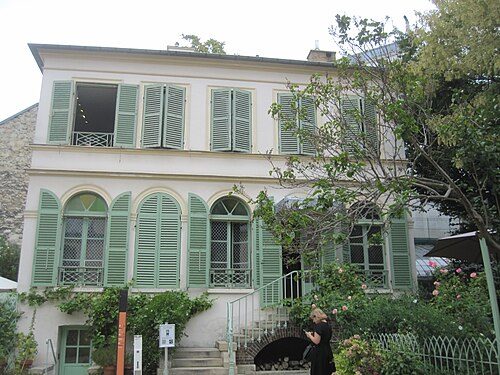
- The view of the vineyard from the back of the Musée de Montmartre’s gardens.
Timeline
- 1929Poulbot and friends dub the waste plot the ‘square de la Liberté'
- 1933Residents plant the vineyard to save the land from development
- 1934First Fête des vendanges, with grapes from Beaujolais
Plaques within 250 m
- 33 Rue Saint Vincent · 40 m
Au carrefour / de la Bohême et des Croix de bois / Roland Dorgelés / 'je hais la guerre / mais j'aime ceux qui l'ont faite""""
- 6 Rue De L Abreuvoir · 60 m
Ici a vécu / le commandant / Heny Lachouque / historien de / Napoléon et de / la Grande Armée / 1883-1971
- 12 Rue Cortot · 80 m
A cette adresse / ont vécu les peintres/ Pierre Auguste Renoir/Maximilien Luce/Emile-Othon Friesz/Raoul Dufy/Emile Bernard/Francisque Poulbot/Charles Camoin/Suzanne Valadon/Maurice Utrillo/André Utter/et/André Antoine/fondateur du Théâtre libre / Léon Bloy/écrivain/Pierre Reverdy/ poète/ Démétrius Galanis/ graveur
- 12 Rue Cortot · 80 m
Ici a vécu et travaillé Démétrius Galanis 1879-1966 peintre et graveur grec membre de l'Institut
- 6 Rue Cortot · 110 m
Erik SATIE / Compositeur de Musique / a vécu dans cette maison / de 1890 à 1898
- 15 Rue Saint Rustique · 130 m
LE CONSULAT / Le consulat fut le lieu de rendez-vous des plus grands artistes, notamment / des peintres comme Picasso, Sisley, Diaz,Van Gogh, Toulouse-Lautec, Monet. / Maurice Utrillo basant son œuvre sur une description des rues de Montmartre / animé d'un souci de perfection dans le réalisme, s'inspira en 1ere toile de sa demeure / natale "La Maison Rose" puis du Consulat (1909). / L'une des plus anciennes maisons de la Butte, le Consulat reste un lieu / emblématique du vieux Montmartre. Situé à l'angle de la rue St. Rustique, / vieille de 9 siècles, ce restaurat continue d'inspirer les artistes et fut le lieu / de tournage de nombreux films, tel que celui de Woody Allen "Tout le monde dit / I love you" (1997)
- 6 Place Du Tertre · 140 m
Le 30 mars 1814 / les cosaques lancèrent ici / en premier, leur très fameux "bistro" / et sur la butte, naquit ainsi, le dîgne ancêtre de de nos bistrots. / 180eme anniversaire / Syndicat d'initiative du Vieux Montmartre
- 1 Rue Des Saules · 140 m
A cet emplacement / s'élevait jusqu'en 1926 une maison paysanne / habitée de 1834 à 1836 par le compositeur / Hector Berlioz / Il y écrivit Harold en Italie et Benvenuto Cellini / association Hector Berlioz et Société """"Le Vieux Montmartre""""
Commemorative plaques, Ville de Paris open data (ODbL); transcriptions as published, in French. 30 in all within this radius.