East of the Bastille, the road to Vincennes ran through lands belonging to the royal abbey of Saint-Antoine-des-Champs. In 1471, according to the standard account, Louis XI allowed the craftsmen working on the abbey’s territory to practise their trades free of the Paris guilds, which strictly controlled who could make and sell what inside the city. Joiners, cabinetmakers and carvers settled here in growing numbers, and the privilege was confirmed in the seventeenth century. For three hundred years the Faubourg Saint-Antoine was the furniture workshop of Paris, and the trade shaped its buildings: long, narrow plots running back from the street, each with courtyard after courtyard of workshops, stores and lodgings.
The cour de l’Étoile-d’Or is one of the most complete survivors. It began around 1640 as a country house with a courtyard and garden, behind a street front on the faubourg. Of that house only a staircase remains, with a wooden balustrade of the 1640s. As the cabinetmakers moved in, the owners built over the plot: low buildings of one or two storeys around the first courtyard in the early eighteenth century; a second, working courtyard in place of part of the garden; then, in the nineteenth century, workshops and a tall industrial building filling what remained. The name came from the sign that once hung over the entrance.
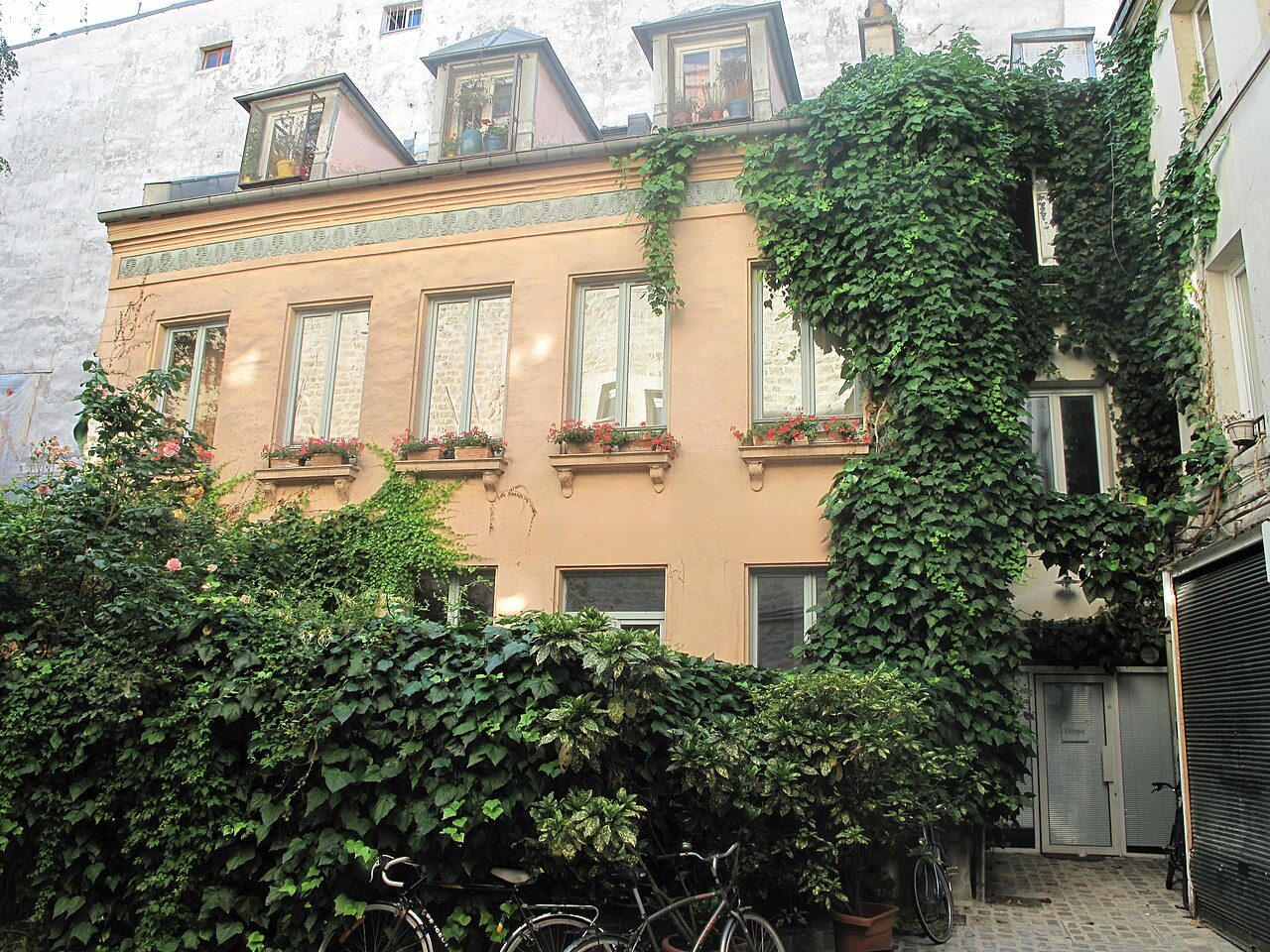
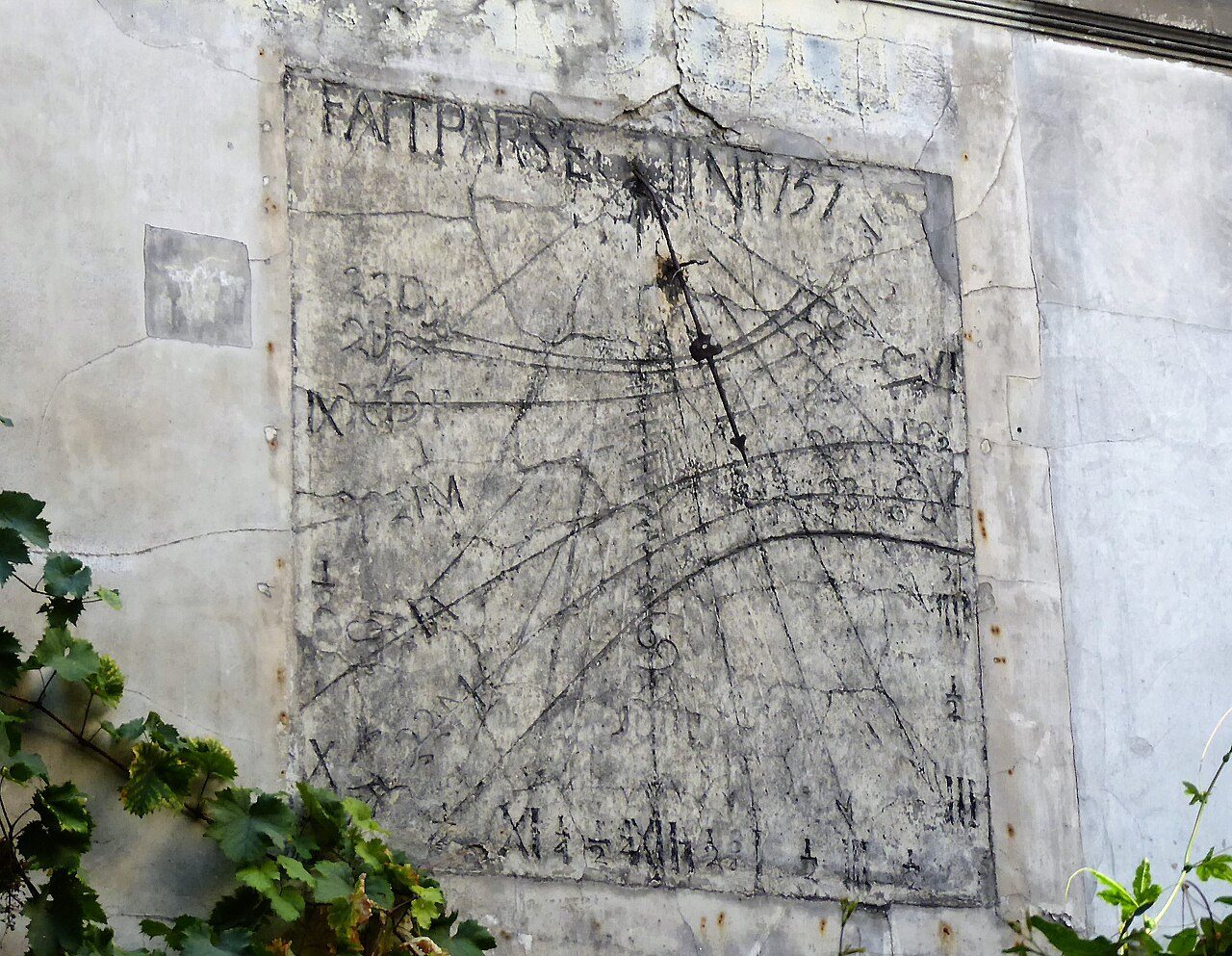
The first courtyard, about forty metres long, keeps a house of the early nineteenth century with a frieze of palmettes and, on its wall, a vertical sundial of the ‘declining’ kind, laid out for a wall that does not face due south. The cobbles, the uneven roofs and the mixture of centuries make it read like a cross-section of the faubourg’s history.
The furniture trade has largely left the faubourg, and the workshops have become studios, offices and flats. In the 1990s the site was renovated, and the second courtyard was named the cour des Shadoks after Jacques Rouxel, creator of the cult animated series Les Shadoks, who lived here. The staircase railing has been listed since 1928, and the façades and roofs of both courtyards since 1997.
What to look for
- The vertical sundial on the house with the palmette frieze in the first courtyard.
- The wooden balustrade of the 1640s staircase, all that remains of the original house.
- The four-storey late nineteenth-century workshop building in the second courtyard.
- The deep, narrow plot itself: courtyard opening into courtyard, typical of the faubourg.
Timeline
- 1471Louis XI frees craftsmen on the abbey’s lands from guild rules (uncertain date)
- c. 1640Country house built; its staircase survives (uncertain date)
- early 1700sLow buildings added around the first courtyard (uncertain date)
- late 1800sFour-storey workshop building in the second courtyard (uncertain date)
- 1928Staircase railing, street façade and roof protected
- 1997Façades and roofs of both courtyards protected
Plaques within 250 m
- 51 Rue De Lappe · 100 m
ICI EST NE LE 25 NOVEMBRE 1917/FRANCIS LEMARQUE/FILS DE ROSE ET JOSEPH KORB/AUTEUR COMPOSITEUR INTERPRETE/POETE DE PARIS/DECEDE LE 20 AVRIL 2002
Commemorative plaques, Ville de Paris open data (ODbL); transcriptions as published, in French.