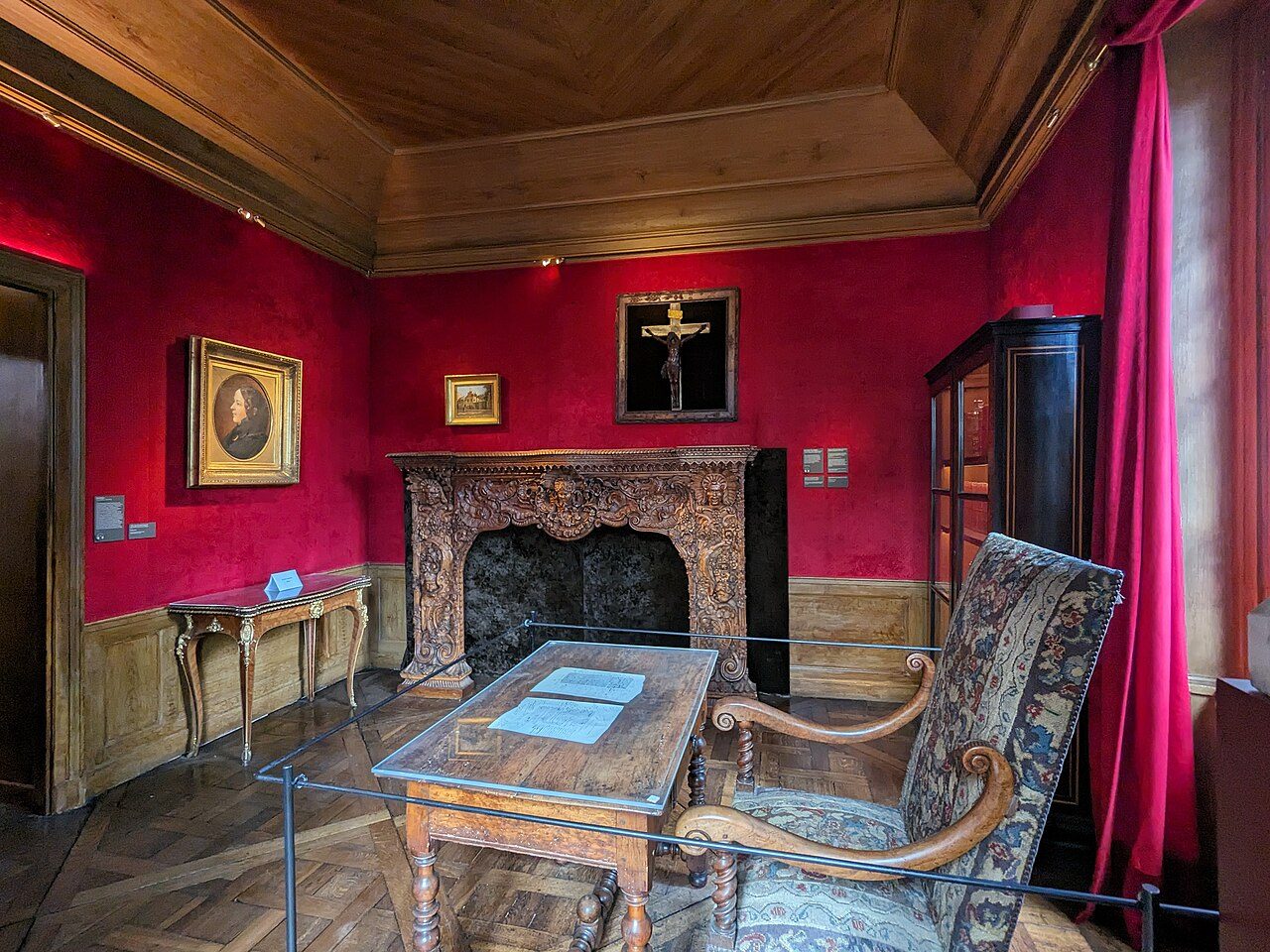
In October 1840 Honoré de Balzac, forty-one, famous and deep in debt, rented a few rooms in an outbuilding of a larger house on the rue Basse in Passy, then a village outside the city walls. The lease was in the name of his housekeeper, Louise Breugnol, and he was known locally as ‘Monsieur de Breugnol'. Visitors needed a password. The house was built into the slope above the Seine, so that the apartment had one door at street level on the upper side and, down a flight of steps, another giving onto the rue Berton below: a useful arrangement for a man whose bailiffs might call at either.
He stayed seven years. At a plain table in the small study he revised the whole of La Comédie humaine, the title he gave his assembled novels in these years, and wrote some of its last great books, among them La Cousine Bette, Le Cousin Pons and much of Splendeurs et misères des courtisanes. He worked by night, fuelled by coffee, and left in 1847 for a grander house in the rue Fortunée, where he died three years later.
The rest of the property was later swallowed by the city; the main house that once screened the pavilion from the street was demolished in 1937 when the rue Raynouard was widened. The modest wing survived because an admirer, Louis Baudier de Royaumont, rented it in 1908 and opened it to visitors as a shrine to Balzac. The pavilion was listed in 1913. The State, which had been left the apartment in 1929, passed it to the City of Paris in 1949, and it has been a municipal museum since 1960, with a research library of Balzac’s works and their illustrations.
It is the only one of Balzac’s Paris homes still standing. The rooms are small and low, the garden green and steep, with a view over the river towards the Eiffel Tower. After renovation it reopened in 2019 with a new entrance and café on the rue Raynouard side.
What to look for
- Balzac’s work table and chair in the little study.
- The rue Berton below the house: a narrow, cobbled lane with old walls, and the house’s lower door.
- The stone on the rue Berton wall that once marked the boundary between Passy and Auteuil.
- Rodin’s monumental head of Balzac (c. 1899) in the first room.
Timeline
- 1840Balzac moves in under the name of Monsieur de Breugnol
- 1847Balzac leaves for the rue Fortunée
- 1908Louis Baudier de Royaumont rents the apartment to make a museum
- 1913The pavilion is listed as a historic monument
- 1949The State passes the house to the City of Paris
- 2019Reopening after renovation
Works to see here
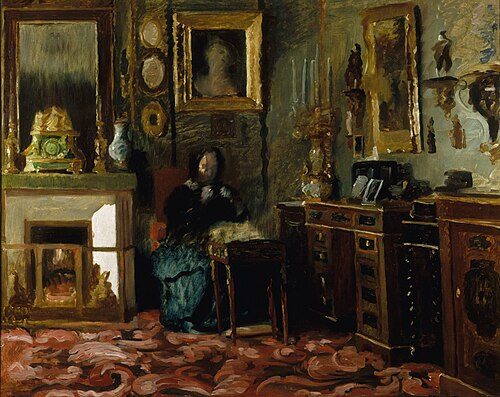
Photo: unknown, Public domain, Wikimedia Commons
Plaques within 250 m
- 24 Rue Berton · 10 m
Borne posée en 1731 pour indiquer les limites des seigneuries d'Auteuil et de Passy Paris 1910
- 44 Avenue Du Président Kennedy · 140 m
Inauguration de la Place de la Bolivie / par / M. Jean Tibéri / maire de la Ville de Paris / Hommage à l'amitié franco-bolivienne / M. Gonzalo Sanchez de Lozada / président de la République de Bolivie / M. Carlos Antonio Carrasco, Ambassadeur de Bolivie en France. Paris 12-XI-1996
- 10 Rue Du Ranelagh · 240 m
PIERRE MAC ORLAN / 1882-1970 / DE L'ACADEMIE GONCOURT / A VECU DE 1913 A 1927 DANS CET / IMMEUBLE OU IL ECRIVIT NOTAMMENT / « LE QUAI DES BRUMES »
Commemorative plaques, Ville de Paris open data (ODbL); transcriptions as published, in French.