
c. 1820–1850
Romantic Paris
Romantic Paris has a date of birth that every French schoolchild learns: 25 February 1830, the first night of Victor Hugo’s Hernani, when long-haired young men, Théophile Gautier in a red waistcoat among them, shouted down the defenders of classical tragedy. Five months later the July Revolution replaced the last Bourbon king with Louis-Philippe, and for eighteen years, until the revolution of 1848, Paris was the capital of a bourgeois monarchy and of a generation of artists who defined themselves against it.
They lived in a city that was still largely medieval in plan, dark, muddy and without pavements. The covered passages were the modern answer: glass-roofed lanes of shops cut through the blocks, where people could stroll out of the rain. The Passage des Panoramas, opened around 1799 and remodelled in 1834, the Galerie Véro-Dodat and the Galerie Vivienne, both opened in 1826, and the Passage Jouffroy of the mid-1840s, built of iron and glass, show how the form grew. In Véro-Dodat, a caricature shop pinned up a fresh sheet against Louis-Philippe every day.
The artists settled in particular quarters. Below Montmartre, the new streets nicknamed the Nouvelle Athènes filled with painters and actors; there Ary Scheffer received Delacroix, Sand, Chopin and Liszt on Friday evenings from 1831, in the house that is now the Musée de la Vie romantique. Hugo took a large apartment on the place Royale in 1832 and stayed until 1848. Balzac, hiding from his creditors, rented rooms in Passy in 1840 under another name and revised La Comédie humaine there. On the Île Saint-Louis, the young Baudelaire lodged under the roof of the hôtel de Lauzun in 1843–1845, while Théophile Gautier and others met downstairs to eat hashish and write about it.
The movement did not end neatly. Delacroix, its great painter, moved to the rue de Furstenberg in 1857 to be near the chapel he was painting at Saint-Sulpice, and died there in 1863. Gustave Moreau, a generation younger, settled in his family’s house in the Nouvelle Athènes in 1852 and carried something of Romantic ambition into the Symbolism of the end of the century. The places in this thread are mostly modest: lodgings, studios, shopping arcades. That is their charm. They show Romantic Paris at home rather than on stage.
-
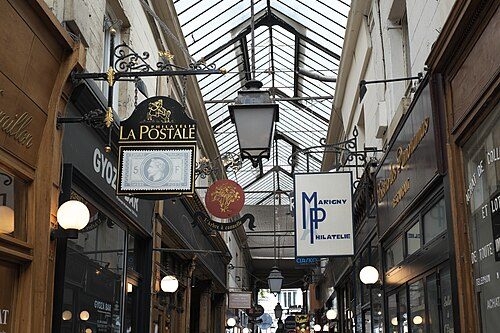 Covered passages · 2ndPassage des Panoramas
The first of the great passages, opened around 1799, lit by gas around 1816–1817 and remodelled with side galleries in 1834.
-
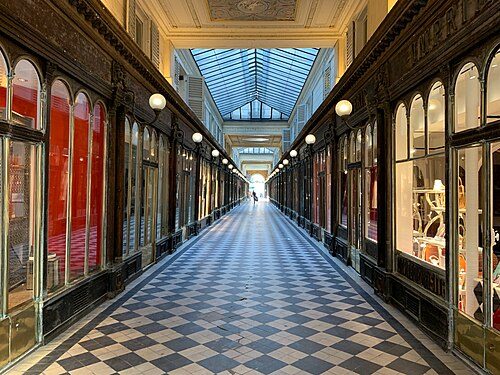 Covered passages · 1stGalerie Véro-Dodat
A passage of 1826 where Aubert’s shop sold the caricatures of La Caricature and Le Charivari, and where the actress Rachel later lived.
-
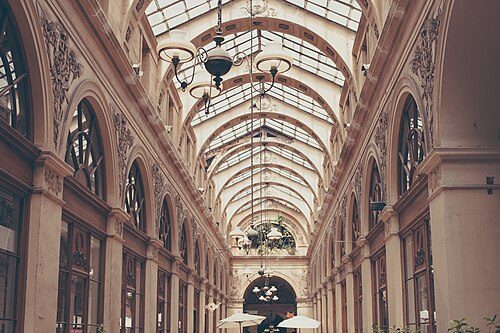 Covered passages · 2ndGalerie Vivienne
The most elegant passage of the 1820s, opened in 1826 near the Palais-Royal, where Vidocq lived in 1840.
-
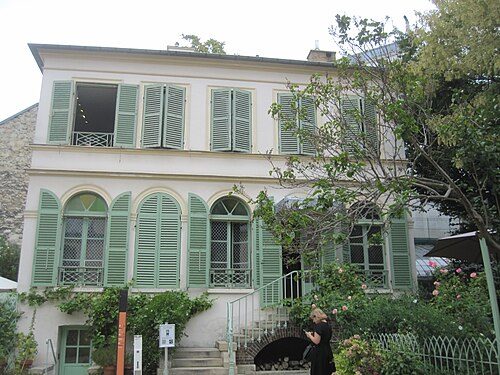 Small museums · 9thMusée de la Vie romantique
Ary Scheffer’s house and studio, where from 1831 Romantic Paris met on Friday evenings.
-
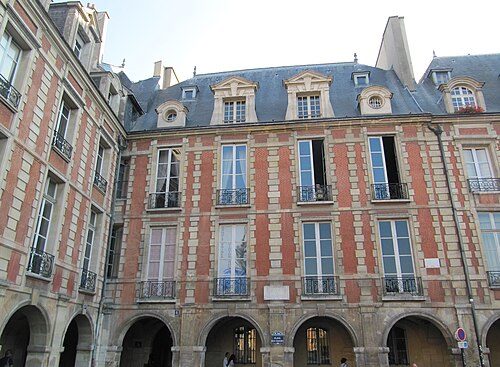 Writers’ houses · 4thMaison de Victor Hugo
Hugo’s apartment from 1832 to 1848, his most public years, when the leader of the Romantics entered the Académie and politics.
-
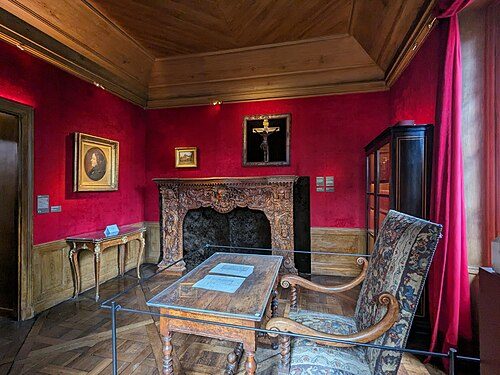 Writers’ houses · 16thMaison de Balzac
The Passy hideaway where Balzac, from 1840 to 1847, revised La Comédie humaine and wrote some of its last great novels.
-
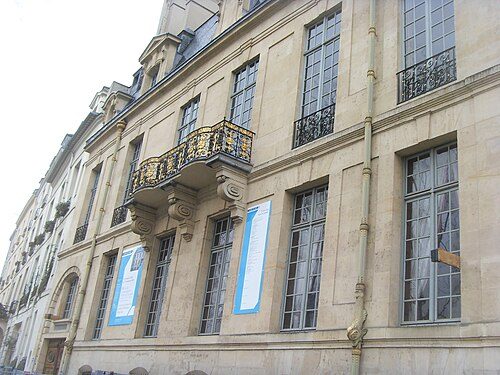 Writers’ houses · 4thHôtel de Lauzun
Where Baudelaire lodged in 1843–1845 and the Club des Haschischins met from 1844.
-
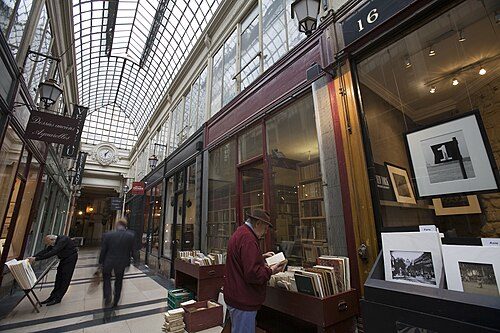 Covered passages · 9thPassage Jouffroy
A passage of the mid-1840s built in iron and glass, carrying the passages’ crowd across the boulevard Montmartre.
-
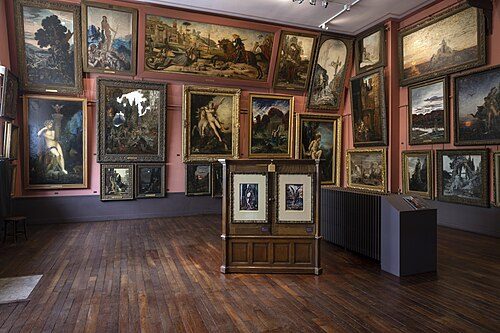 Small museums · 9thMusée Gustave Moreau
The Nouvelle Athènes house where Moreau settled in 1852, a bridge from Romantic ambition to Symbolism.
-
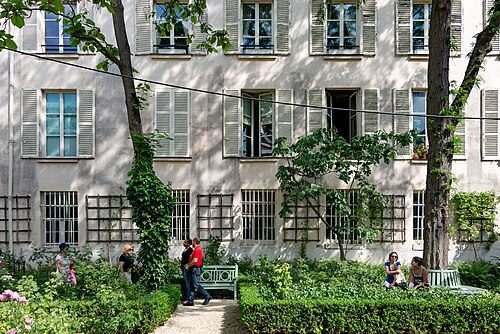 Small museums · 6thMusée national Eugène-Delacroix
The last home and garden studio of the great Romantic painter, from 1857 until his death in 1863.