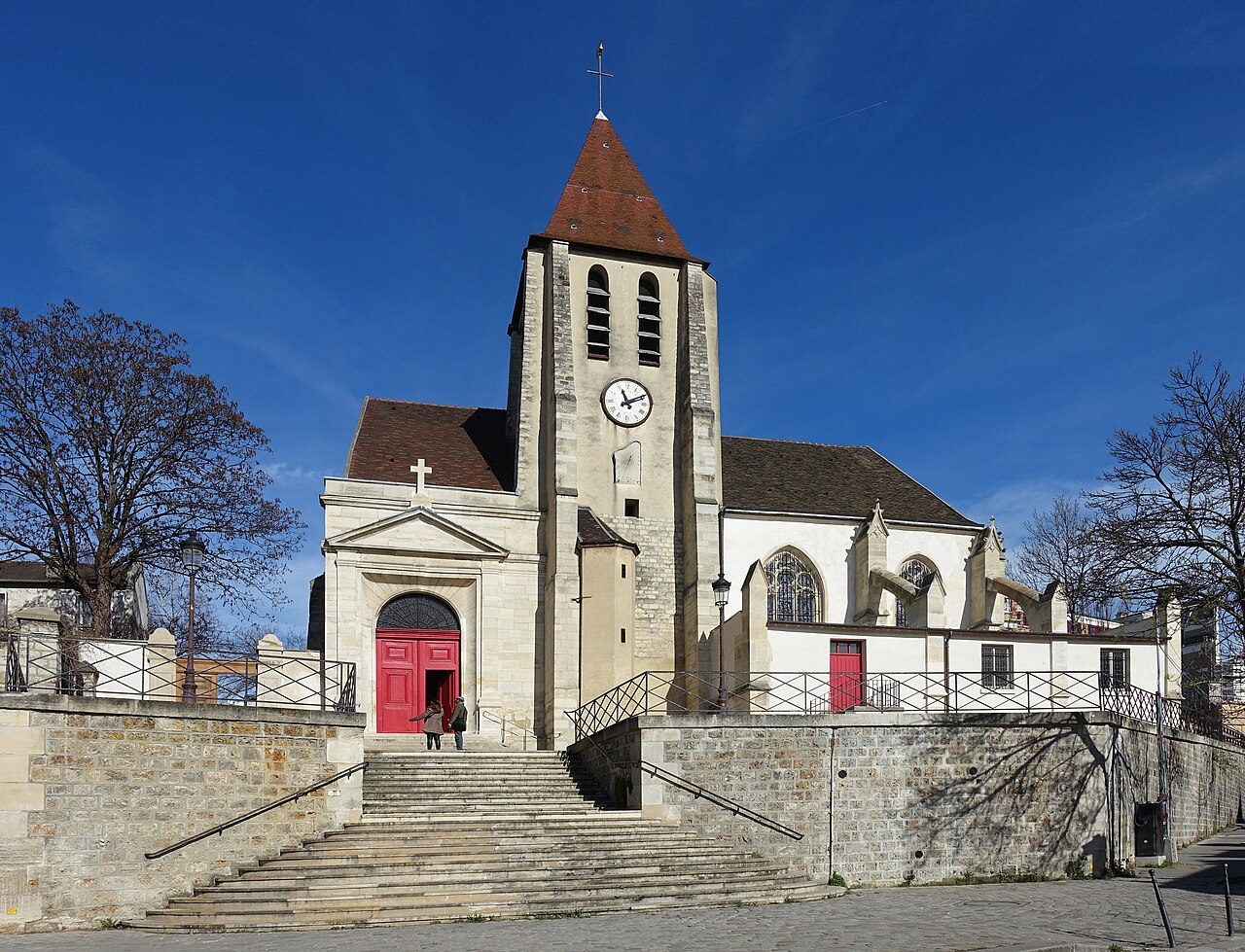
Charonne was a wine-growing village on the hills east of Paris until 1860, when the city swallowed it along with Belleville and the other communes inside the fortifications. Its church survived the absorption almost unchanged, and it still looks like what it was: a village church at the top of a short flight of steps, with a squat bell tower, a churchyard full of old graves, and a small square in front where the village street once ran.
Tradition places its origins in a meeting around 430 between Germain, bishop of Auxerre, and the young Geneviève, future patron saint of Paris, on the slopes of Charonne; an oratory is said to have marked the spot. The oldest surviving fabric, the heavy piers of the tower, dates from the twelfth century. The church was rebuilt in the thirteenth and fifteenth centuries, and a plaque near the choir, dated 1460, promises the faithful ‘forty days of true pardon'. A fire in the seventeenth century destroyed the west front and part of the nave; the present façade carries the date 1737.
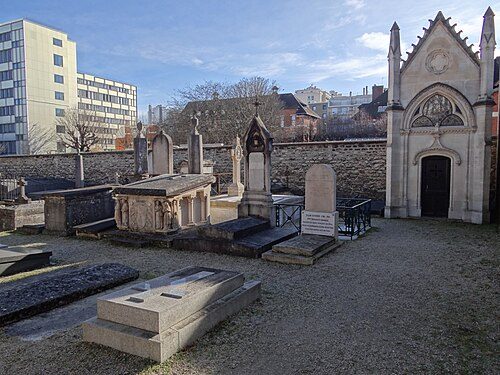
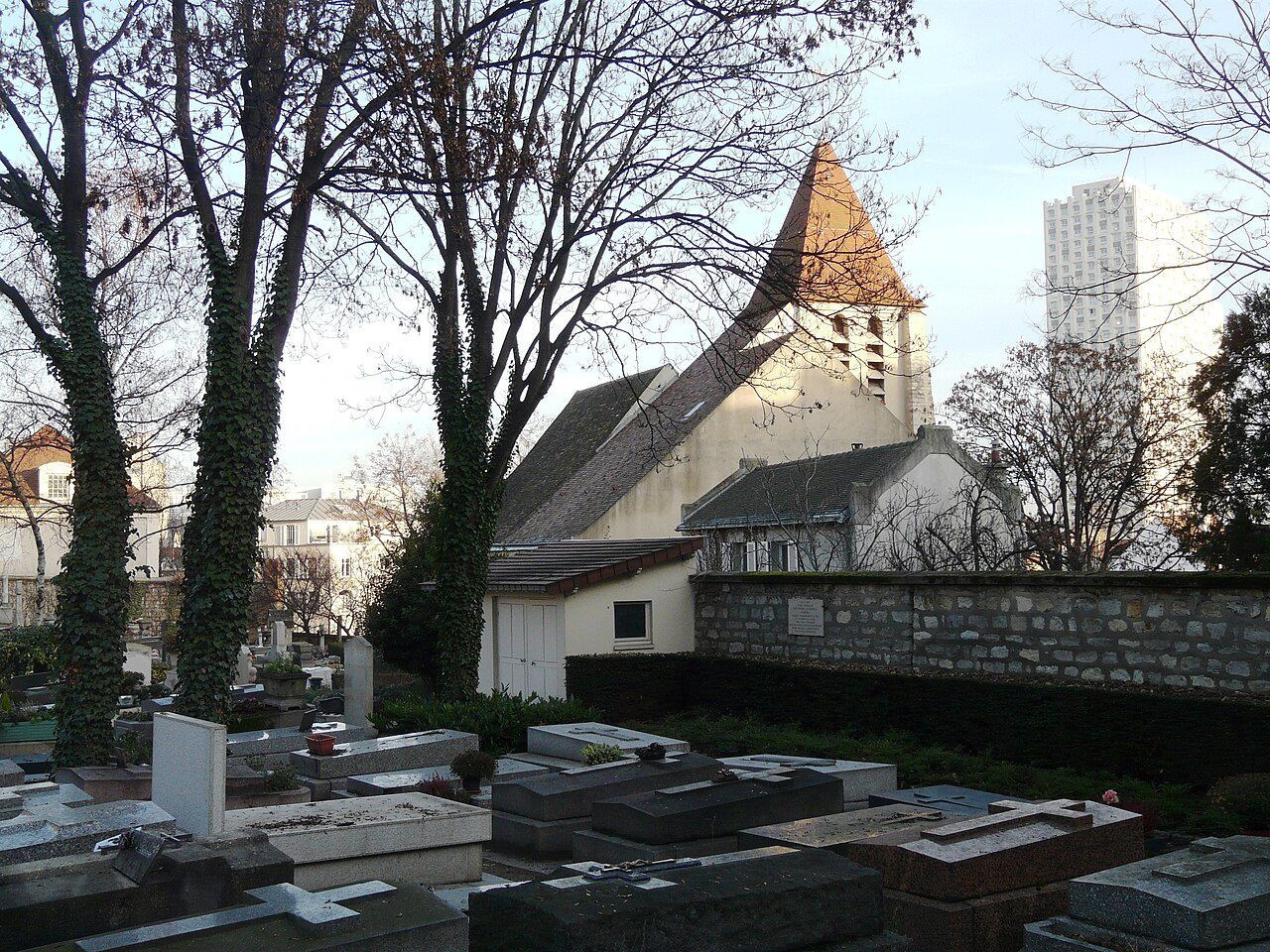
What makes it rare is the cemetery that still wraps around it. Parish churchyards disappeared from Paris in the eighteenth century for reasons of hygiene; this one lay outside the city, in a village that would not join Paris for another century. It became a municipal cemetery in 1791, was enlarged in the nineteenth century and is now administered with Père-Lachaise. Only Saint-Pierre de Montmartre shares this arrangement. Among the graves is that of François Bègue, known as Père Magloire, a house painter who liked to say he had been Robespierre’s secretary; his nineteenth-century tomb is itself a listed monument. In 1897, when an annex of the cemetery was cleared, workmen found the remains of some eight hundred men, identified as fighters of the Commune shot in May 1871; they were reburied along the south wall, where a plaque recalls them.
The clay hill has never been kind to the building. After serious cracks appeared in 2009 the church was closed, its foundations consolidated and the ground excavated, revealing a Carolingian burial ground; it reopened after works completed in 2016. Film-lovers know the church from the closing wedding of Les Tontons flingueurs (1963).
What to look for
- The squat medieval bell tower, the oldest part of the church.
- The date 1737 on the keystone of the south doorway.
- The 1460 indulgence plaque inside, near the choir.
- The tomb of François Bègue, ‘Père Magloire', in the cemetery.
- The plaque on the south wall for the Communards reburied there.
Timeline
- c. 430Traditional meeting of Germain of Auxerre and Geneviève at Charonne (uncertain date)
- 1460Church dedicated after rebuilding; indulgence plaque
- 1737Present west front built
- 1860Charonne annexed to Paris
- 1897Remains of about 800 Communards found and reburied
- 1923Church listed as a historic monument
- 2016Structural consolidation completed
Plaques within 250 m
- 148 Rue De Bagnolet · 240 m
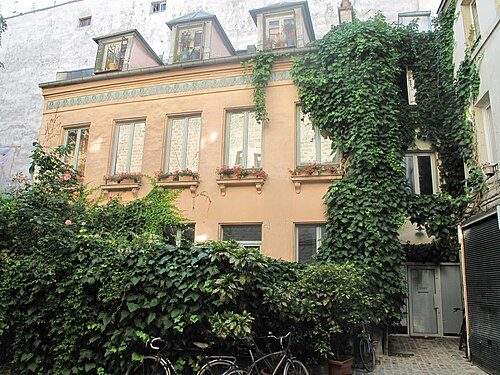
CETTE MAISON ACHETEE / PAR LE BARON DE BATZ / EN 1787 / SERVIT DE REFUGE / AUX CONJURES ROYALISTES / QUI TENTERENT DE SAUVER / LOUIS XVI / LE 21 JANVIER 1793
- 50 Rue De Vitruve · 240 m
Ici a vécu/de 1946 à 1959/BARBARA/auteur compositeur interprète/1930-1997/""""Et faire jouer la transparence/au fond d'une cour aux murs gris/où l'aube aurait enfin sa chance""""
Commemorative plaques, Ville de Paris open data (ODbL); transcriptions as published, in French.
Sources
- Ville de Paris: Cimetière de Charonne
- Diocèse de Paris: Saint-Germain de Charonne
- POP / Mérimée: Cimetière Saint-Germain-de-Charonne (PA00086781)
- Wikipédia: Église Saint-Germain-de-Charonne
- Wikipedia: Saint-Germain de Charonne, Paris
- Paris ZigZag: Le mystérieux et bucolique cimetière de Charonne
- Wikidata Q1410649 (coordinates, CC0)
- Base Mérimée PA00086782