
1789–1799, and after
The Revolution and its memory
The Revolution in Paris is usually told through great public spaces: the Bastille, the Tuileries, the square where the guillotine stood. This thread follows it into smaller places, where its traces are more personal and, sometimes, more disturbing.
It begins on the edge of the city. The customs wall of the Farmers-General, finished just before 1789, was hated as a symbol of the tax system, and in July 1789 its toll houses were among the first targets of the crowd. Ledoux’s Rotonde de la Villette survived, and on the night of 20 to 21 June 1791 the royal family, fleeing in disguise, changed carriages near it at the start of the journey that ended at Varennes. In the cour du Commerce-Saint-André, on the Left Bank, Marat ran the presses of L’Ami du peuple for a time, Danton lived at no. 20, and a German harpsichord maker, Tobias Schmidt, built the first working guillotine in 1792. Whether he tested it there on sheep is a local tradition, not a documented fact.
Then the burial grounds. Louis XVI was buried in the little cemetery of the Madeleine after his execution on 21 January 1793, Marie-Antoinette that October, among some five hundred victims of the guillotine. In 1815 the restored Bourbons took the remains believed to be theirs to Saint-Denis and raised the Chapelle expiatoire on the site, a monument to royal grief that the Commune later tried to pull down. At the other end of the city, when the guillotine was moved to the barrière du Trône in the summer of 1794, two pits were dug in a confiscated convent garden at Picpus. Between 14 June and 27 July, the day Robespierre fell, 1,306 people were thrown into them. Their families bought the ground, and the Marquis de Lafayette chose to be buried beside his wife there.
Memory in Paris is layered. Each régime commemorated its own dead and tried to forget others'. In the churchyard of Charonne, still a village in the Revolution, lies a house painter who liked to call himself Robespierre’s secretary; in 1897 the bones of about eight hundred men shot during the Commune of 1871 were found nearby and reburied along its wall. The places in this thread make no single argument. They show the Revolution as Parisians lived it, at street level, and how differently they chose to remember it.
-
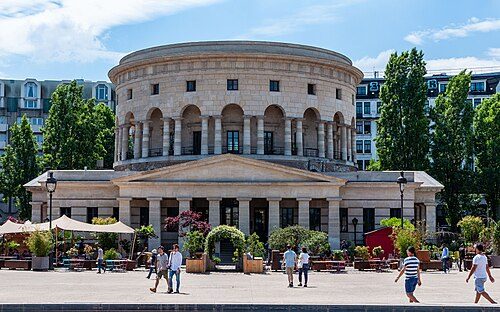 Curiosities · 19thRotonde de la Villette (Barrière Saint-Martin)
A toll house of the hated customs wall, where the royal family changed carriages during the flight to Varennes in June 1791.
-
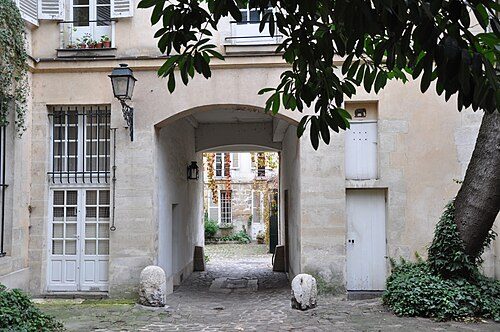 Oldest Paris · 6thCour de Rohan and Cour du Commerce-Saint-André
The passage of Marat’s press, Danton’s house and Schmidt’s workshop, where the first working guillotine was built in 1792.
-
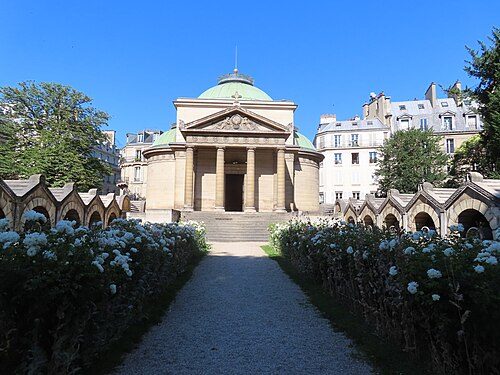 Curiosities · 8thChapelle expiatoire
Built from 1815 on the cemetery where Louis XVI and Marie-Antoinette were buried in 1793: the Restoration’s memorial to the royal dead.
-
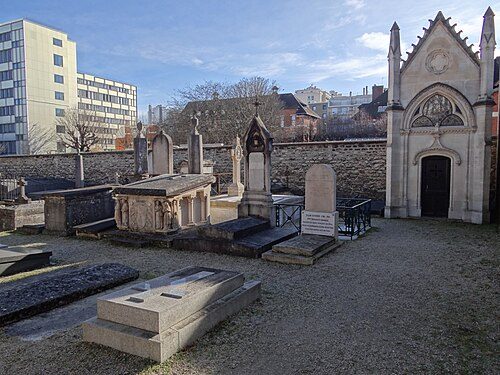 Gardens & green ways · 12thPicpus Cemetery
The pits where 1,306 victims of the last weeks of the Terror were buried in 1794, and the cemetery their families created beside them.
-
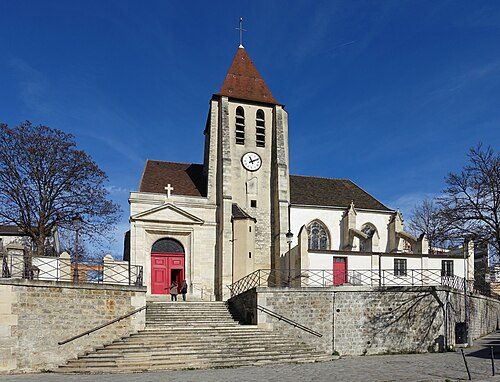 Curiosities · 20thSaint-Germain-de-Charonne
A village churchyard with the tomb of a self-styled secretary of Robespierre and the reburied remains of Communards shot in 1871.