
c. 1st century – c. 1500
Roman and medieval Paris
Paris began as Lutetia, the town of the Parisii, a Gallic people the Romans conquered in the first century BC. The Roman town spread over the island in the Seine and up the slope of the Left Bank hill, with baths, a forum and, on the eastern flank, the arena that still opens off the rue Monge. When the empire faltered, the town drew back onto the island, and its grand buildings became quarries. Lutetia gave way to Paris, and Roman Paris went underground.
Very little of the next thousand years stands complete. What survives is a scatter of pieces, which is why this thread is a treasure hunt. The church of Saint-Julien-le-Pauvre, begun around 1160 in the same years as Notre-Dame, and the village church of Charonne, still wrapped in its graveyard, show how the medieval city and its outlying villages prayed. The wall that Philippe Auguste ordered in 1190, before leaving on crusade, survives in long stretches and odd fragments: sixty metres beside a sports ground in the Marais, a tower inside a shop in the cour du Commerce-Saint-André. The square du Vert-Galant stands roughly where the last Grand Master of the Templars was burned in 1314.
The late Middle Ages left the most legible buildings, and the most legends. Nicolas Flamel, a public scribe who grew rich and gave freely, built a house for the poor in 1407 whose tenants paid in prayers; later centuries made him an alchemist. John the Fearless, Duke of Burgundy, had his cousin murdered in 1407 and then built himself a tower, with a stone tree of oak, hawthorn and hops spreading over its stair. The archbishops of Sens, to whom the bishop of Paris answered until 1622, rebuilt their town house between the late fifteenth century and 1519, half fortress, half palace. On the rue François-Miron, the Cistercians of Ourscamp kept a vaulted cellar under their Paris house; above ground, two timber-framed houses look medieval and may partly be.
Most of these places survived by accident: absorbed into later buildings, buried under fill, forgotten, then rediscovered when Haussmann’s engineers or twentieth-century slum clearance cut through. Their rediscovery is part of their story. The arena was found twice in the nineteenth century and saved by a public campaign in which Victor Hugo lent his name. The Philippe Auguste wall in the Marais emerged when the houses built against it came down after the Second World War. Many claims about this period, such as the oldest house or the oldest tree, are traditions rather than documented facts, and each place says so where it matters.
-
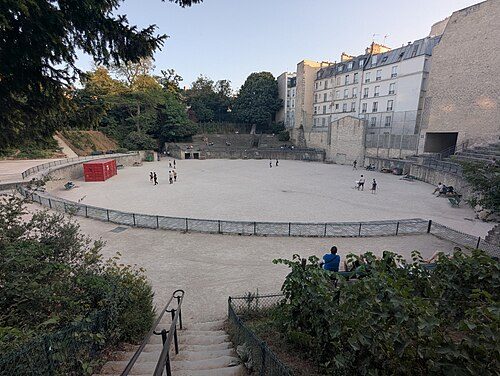 Oldest Paris · 5thArènes de Lutèce
The great survivor of Roman Lutetia: an arena-theatre of about AD 100, lost for centuries and found again in the 1860s and 1880s.
-
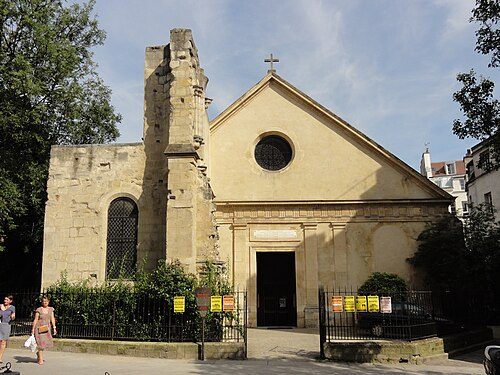 Oldest Paris · 5thSaint-Julien-le-Pauvre and square René-Viviani
A church begun around 1160 on a site of worship going back to the sixth century, where the medieval University held its assemblies.
-
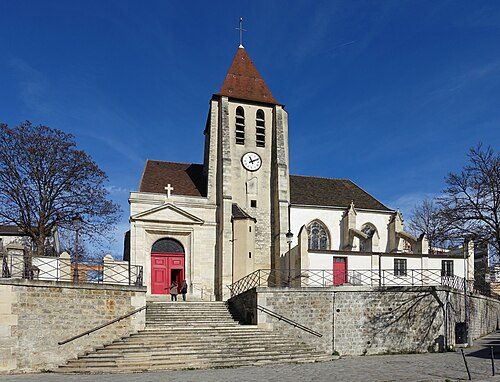 Curiosities · 20thSaint-Germain-de-Charonne
A village church with twelfth-century piers in its tower and a churchyard that still surrounds it, as medieval churchyards once did everywhere.
-
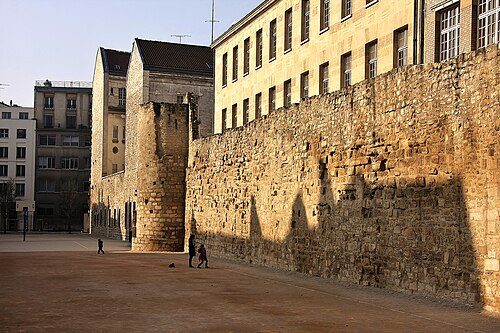 Oldest Paris · 4thWall of Philippe Auguste (rue des Jardins-Saint-Paul)
The longest visible stretch of the wall Philippe Auguste ordered in 1190, which defined the medieval city for a century and a half.
-
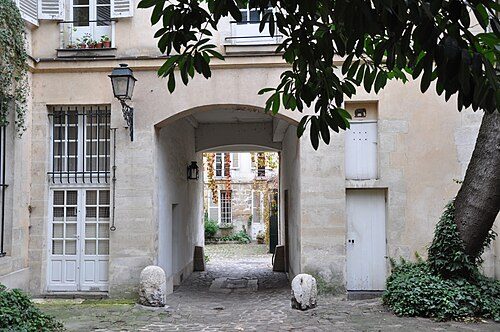 Oldest Paris · 6thCour de Rohan and Cour du Commerce-Saint-André
The same wall, seen in a different setting: a tower inside a passage of 1776, and the courtyards that grew up against it.
-
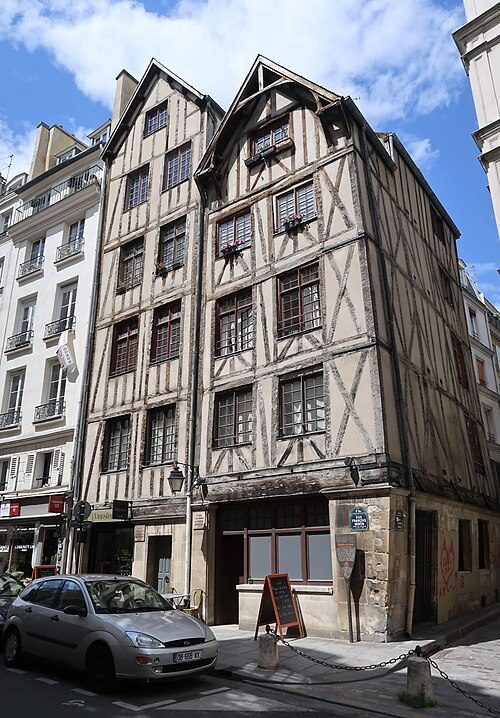 Oldest Paris · 4thRue François-Miron
A street on the line of a Roman road, with a thirteenth-century Cistercian cellar and two timber-framed houses whose age is still debated.
-
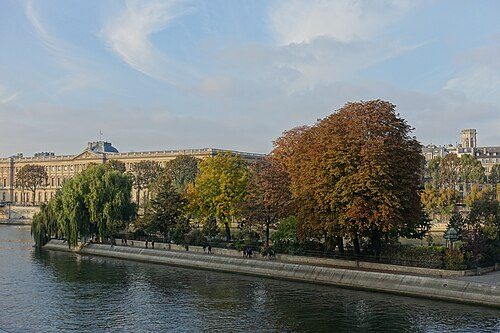 Gardens & green ways · 1stSquare du Vert-Galant
The tip of the Île de la Cité, near the spot where Jacques de Molay was burned in 1314.
-
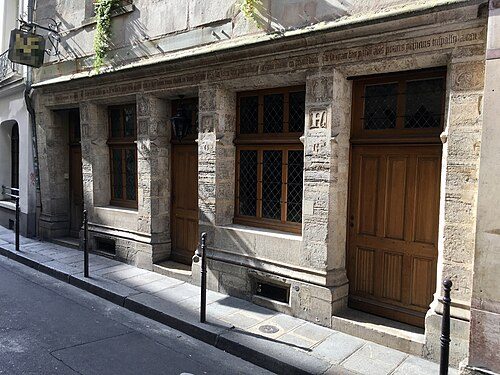 Oldest Paris · 3rdHouse of Nicolas Flamel
A charity house dated 1407 by its own inscription, built by a real scribe whom legend later turned into an alchemist.
-
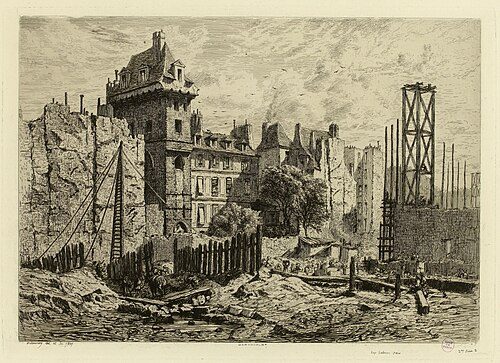 Oldest Paris · 2ndTour Jean-sans-Peur
The tower of a duke at war with his own family, built in 1409–1411, the last piece of the Burgundian palace in Paris.
-
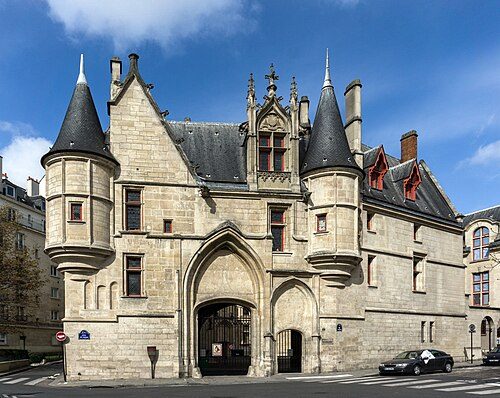 Oldest Paris · 4thHôtel de Sens
One of the very few great medieval town houses left in Paris, finished around 1519 as the Middle Ages gave way to the Renaissance.